Freiburg, Germany
2009 - 2011
Zollhallenplatz
Designed to manage all stormwater on-site, Zollhallenplatz turns infrastructure into landscape, creating a multifunctional urban space rooted in Freiburg’s industrial past.
Project details
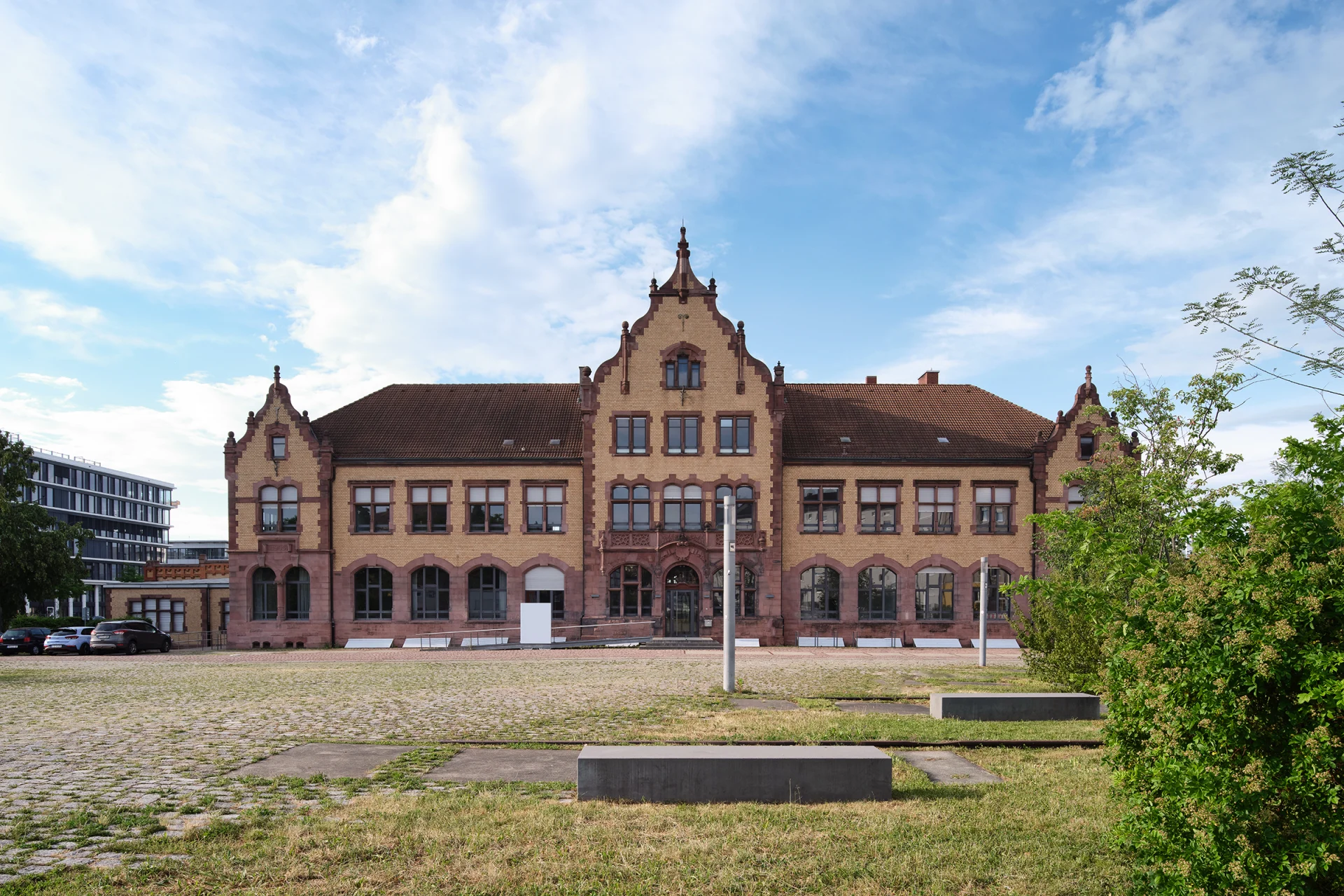
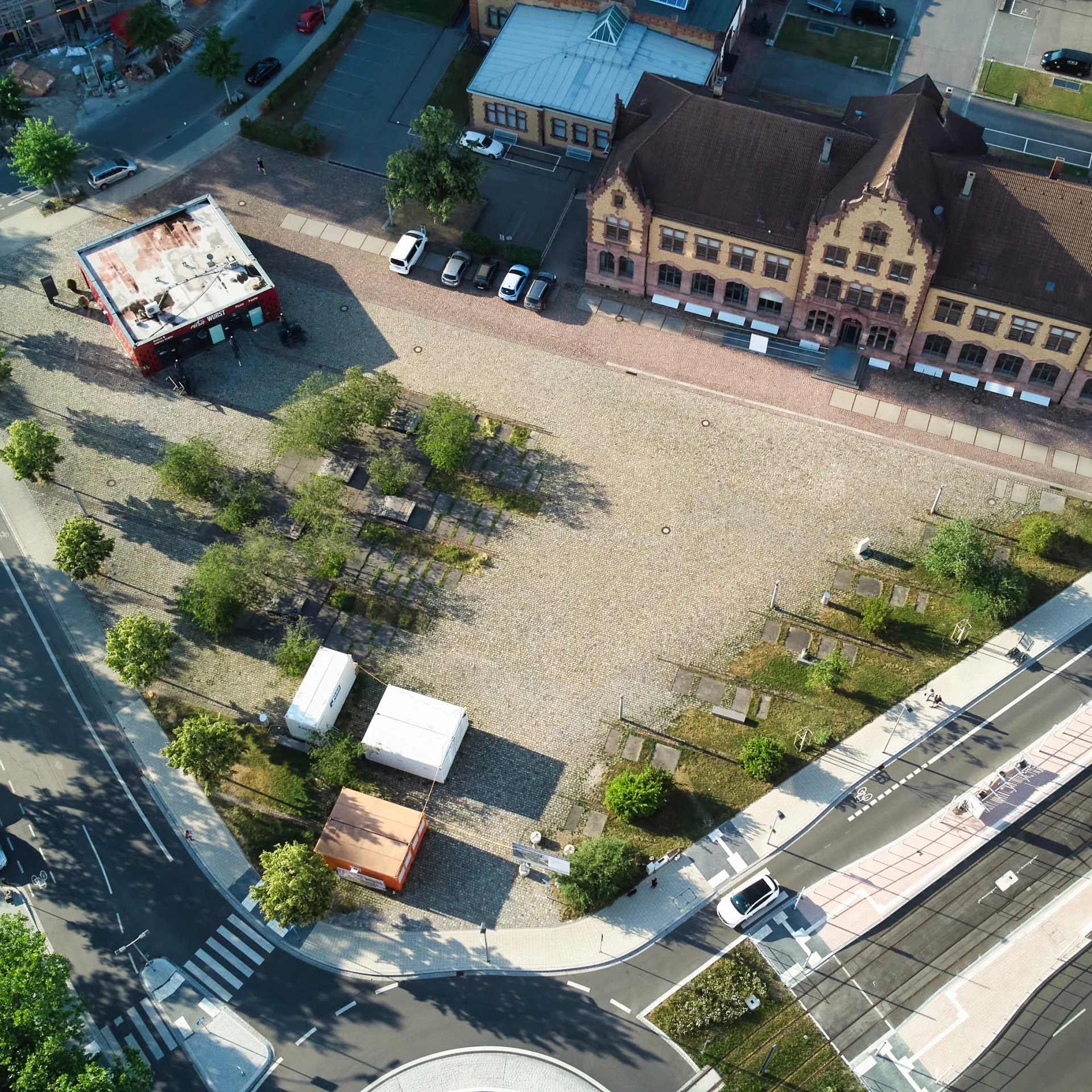
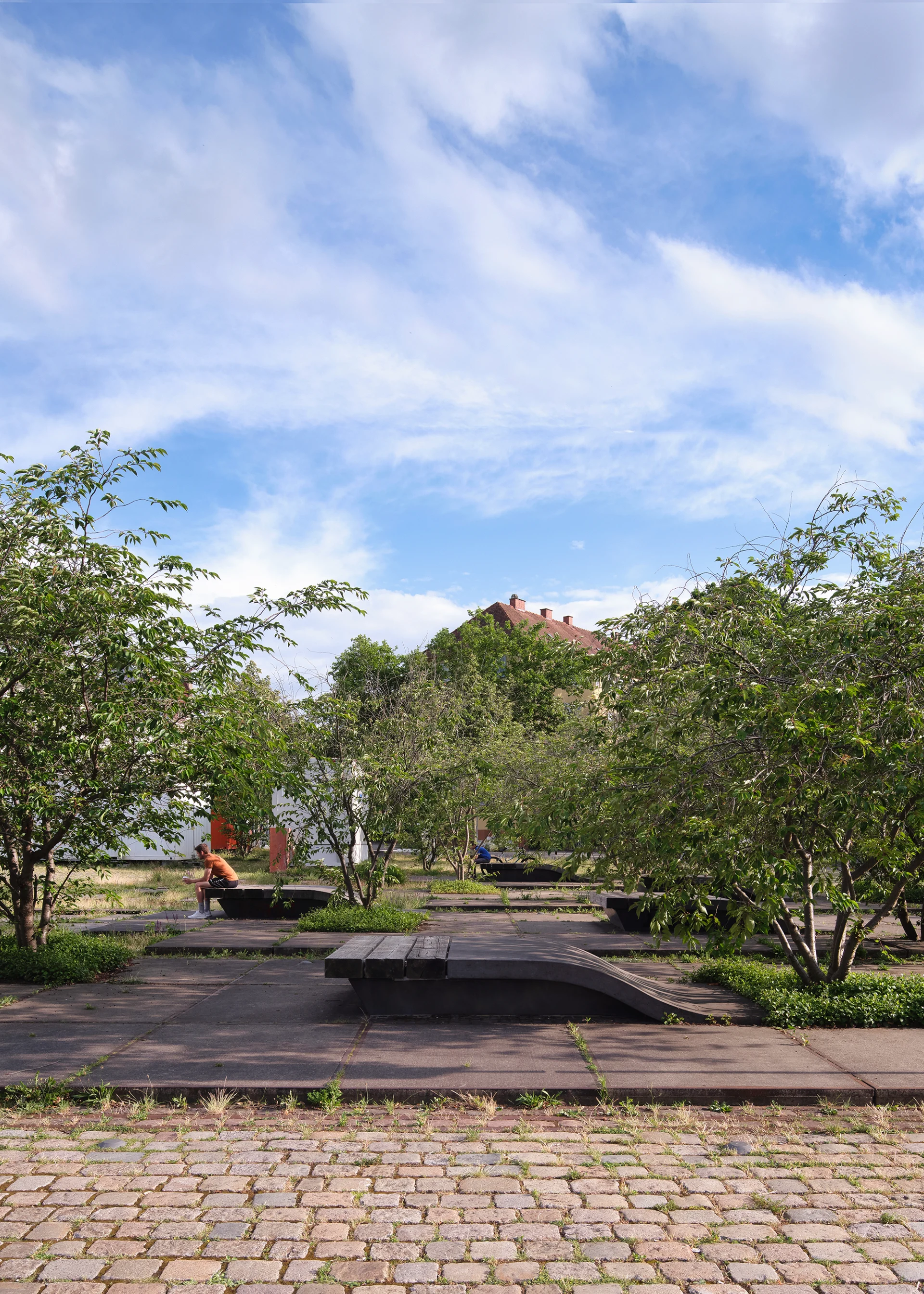
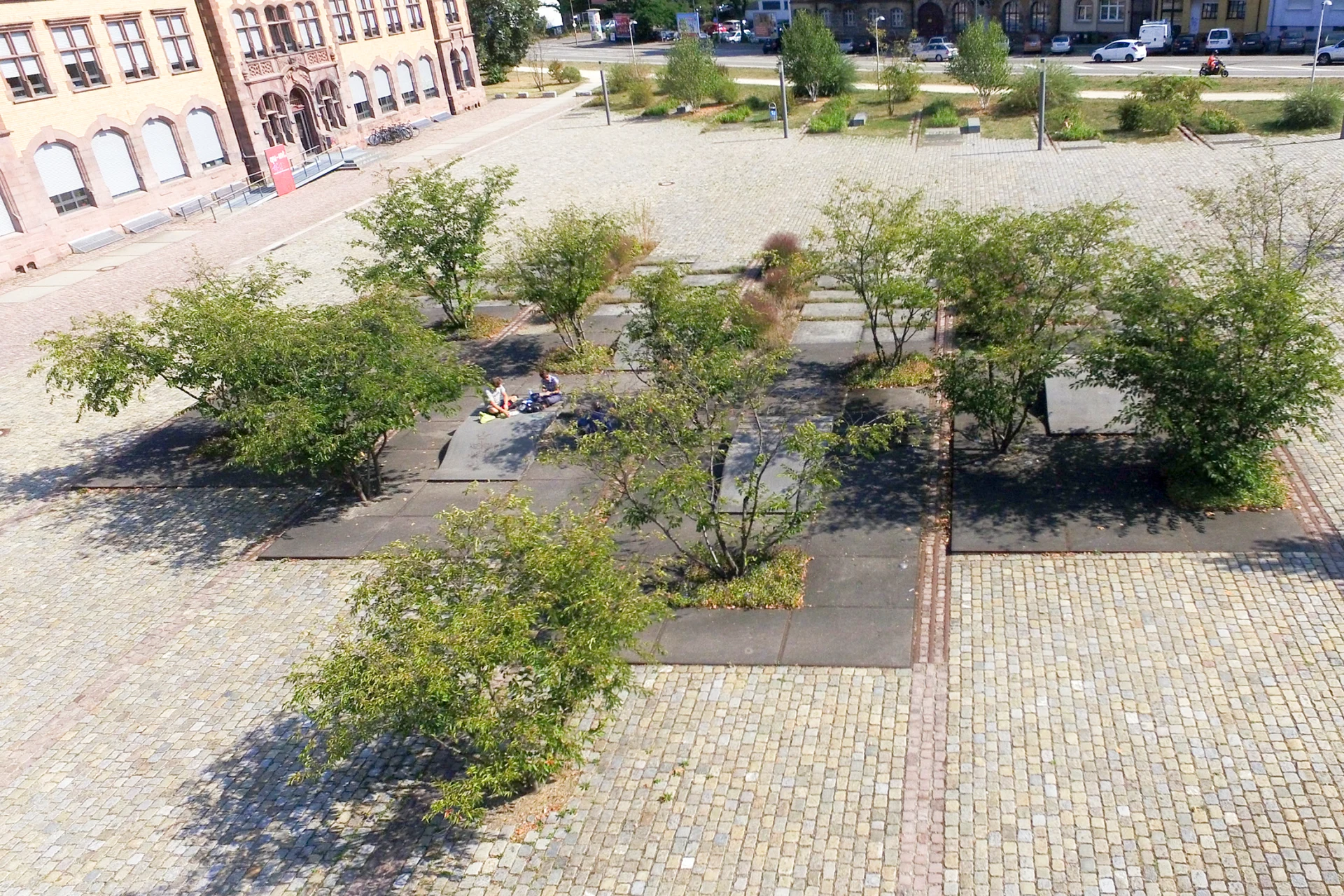
Once a freight rail terminal, Zollhallenplatz has long been defined by connection and industry. Today, the plaza serves as a multifunctional public space in the city of Freiburg, Germany — one that honors its industrial past through salvaged materials and deliberate design gestures that draw past and present into conversation. It is a place where daily life, memory, and resilience meet.
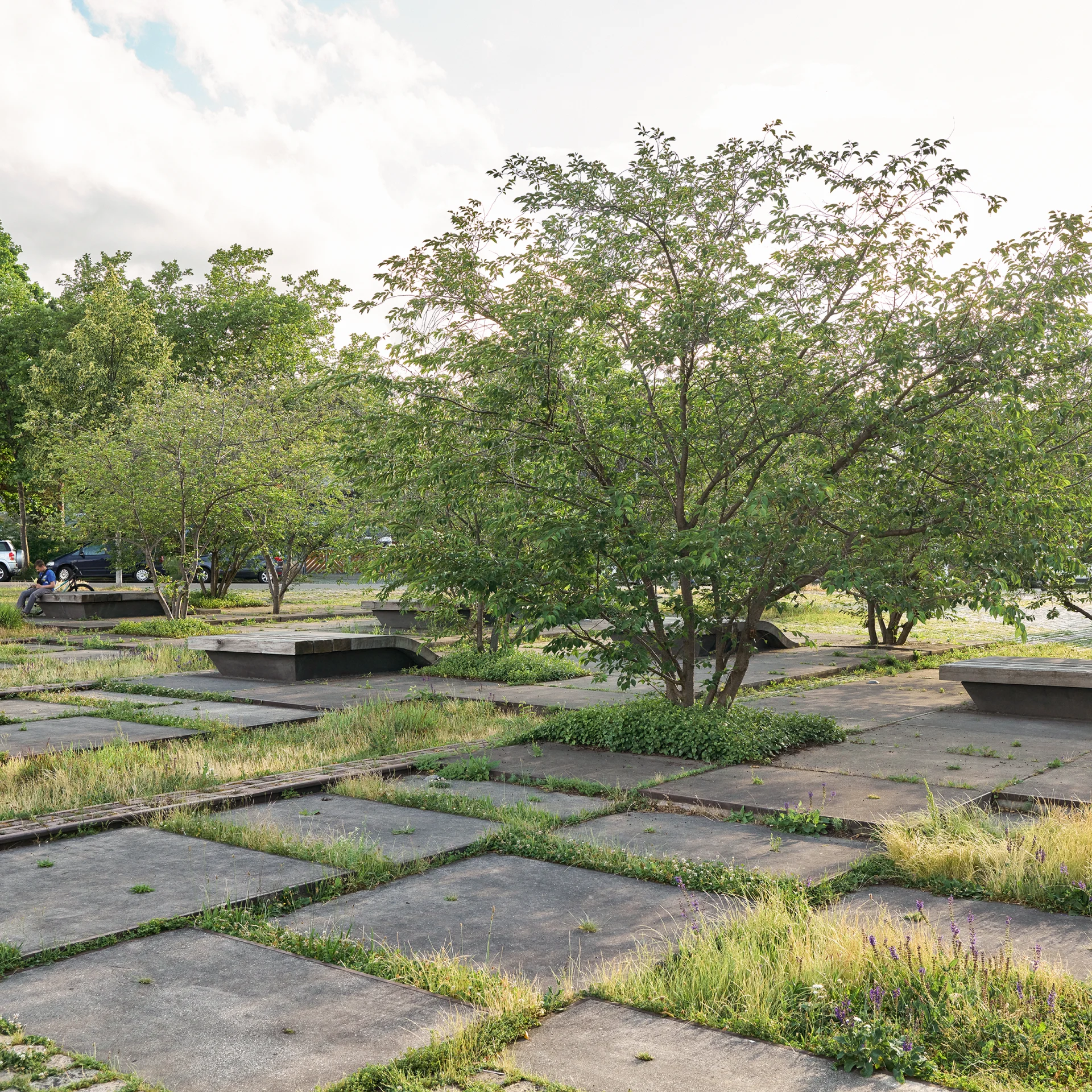
Original railway tracks have been carefully salvaged and inlaid into the plaza's pavement. Demolition materials sourced directly from the railyard find new purpose across all hardscape elements — from paving stones to edging — paired with sculptural benches. Each element has a direct and traceable origin in the site.
“Zollhallenplatz shows how public space can respond, adapt, and give back. By drawing on the site’s industrial legacy and embedding climate resilience into its design, we’ve created a place that feels rooted in Freiburg’s history while meeting the needs of a changing urban future,” says Gerhard Hauber, Director, Landscape, Germany.
Stormwater management
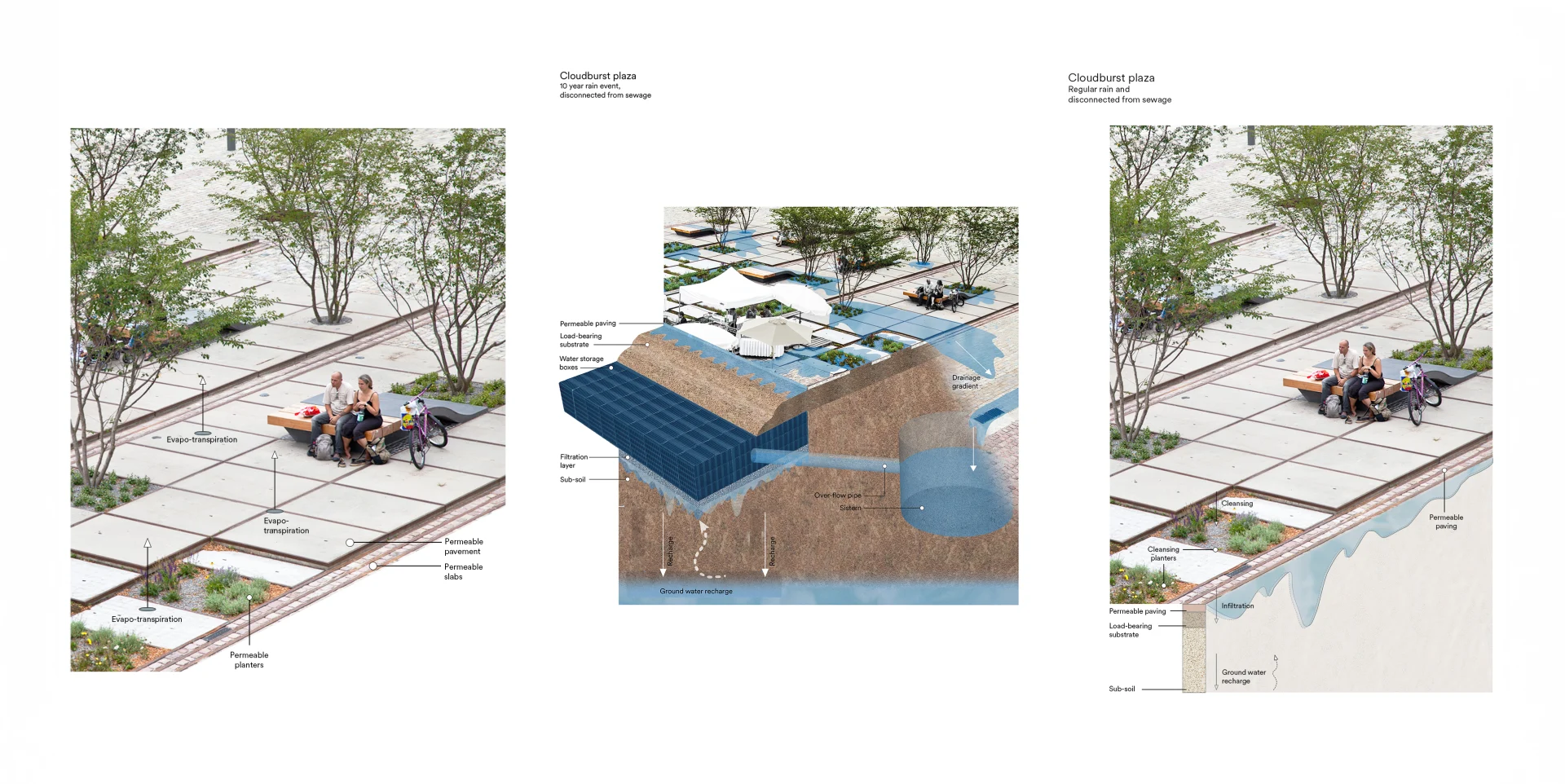
At Zollhallenplatz, water is welcomed. In response to Freiburg's overburdened sewer system and shifting climate patterns, the plaza is designed as a fully self-sufficient hydrological landscape. All rainwater is managed on-site through permeable surfaces, infiltration planters, and subsurface gravel trenches.
During periods of heavy rainfall, subtly indented areas across the plaza temporarily collect excess water — transforming hardscape into surface flood zones that gradually release into the soil below. Beneath the surface, a network of gravel trenches and stormwater storage volumes retain water, ensuring that runoff becomes a resource replenishing the natural water table rather than a burden on the city's sewerage system. Lush infiltration planters with perennials and grasses are integrated throughout, serving both ecological function and visual character.
“Zollhallenplatz shows how public space can respond, adapt, and give back. By drawing on the site’s industrial legacy and embedding climate resilience into its design, we’ve created a place that feels rooted in Freiburg’s history while meeting the needs of a changing urban future.”
Gerhard Hauber
Director, Landscape, Germany
A social landscape
Zollhallenplatz is designed for community, play, and pause — bringing everyday life into conversation with place, climate, and history. The spatial design supports a range of uses: a broad paved area accommodates seasonal markets and civic events, while a grassy corner offers an informal park for everyday leisure. Multi-trunked cherry and serviceberry trees create dappled shade, enhancing comfort through the warmer months.
Benches are deliberately oversized, inviting flexible use — whether visitors gather, rest, or take a solitary moment. A café activates the southern edge of the plaza, creating an easy, lively interface between indoors and out.
Contact
All contacts
Global Director, Landscape

Director, Landscape, Germany
Next project
Jordal Sports Park
Explore project