Singapore, Singapore
2017 - 2025
Punggol Digital District
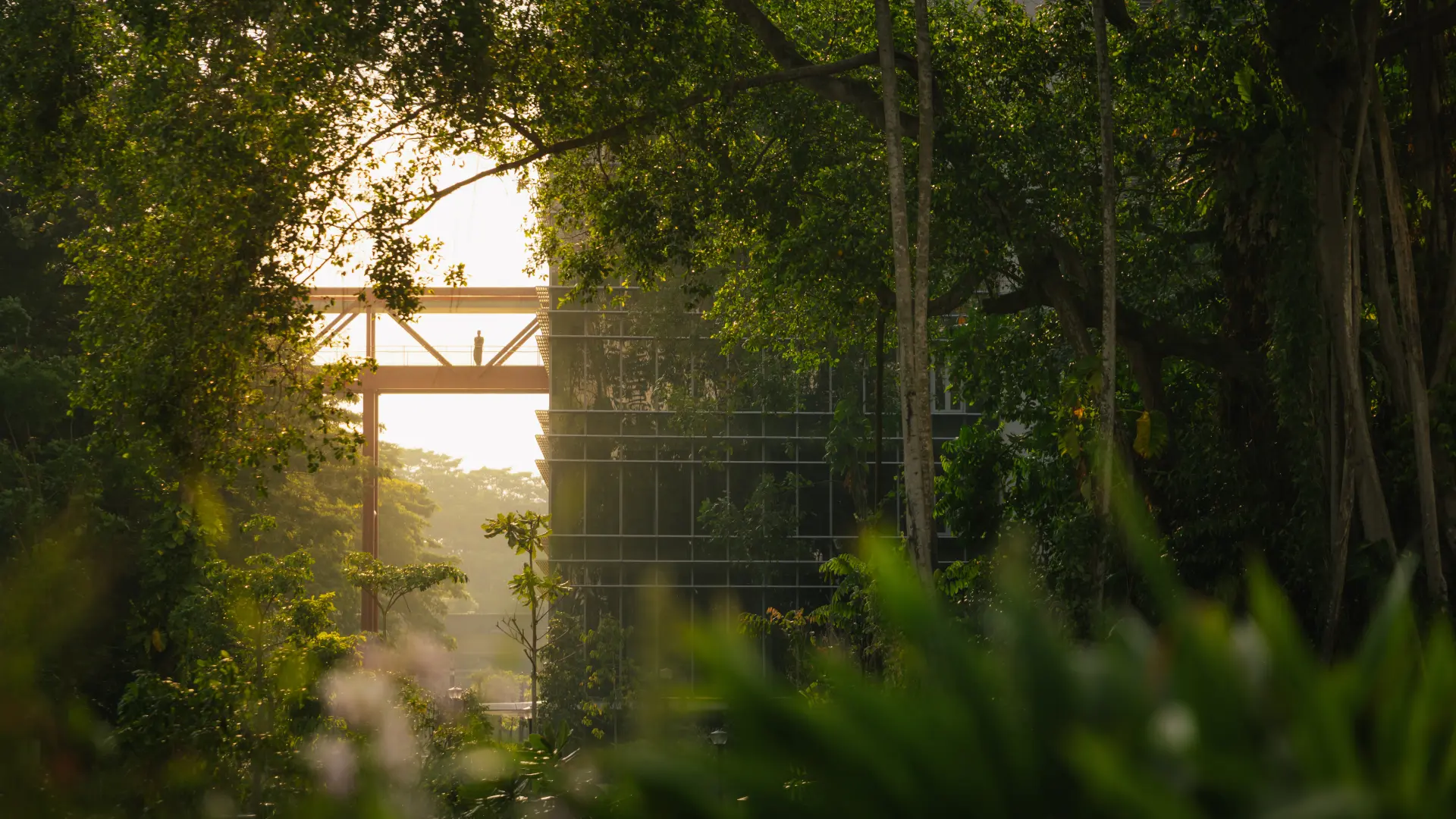
This 50-hectare technology hub redefines the smart district. Intelligence lies in nature: water, trees, and streets form a living infrastructure shaping business, learning, and everyday community life.
Project details
Client
JTC Corporation
Typology
Status
JTC's Punggol Digital District is Singapore's first smart business district. Designed as one big ecosystem, the new district connects the Singapore Institute of Technology campus with new business, research, and community spaces, alongside government agencies, retail and dining amenities. Within this living system, we embedded ecology at the core. It could be considered radical, in a district for cutting-edge technologies, to take a nature-first approach. Rather than isolating landscape from technology, we made it the organizing structure, shaping how the district functions, connects, and grows. Ecological systems, public spaces, and infrastructure coexist seamlessly, forming a place where education, industry, and community thrive together.
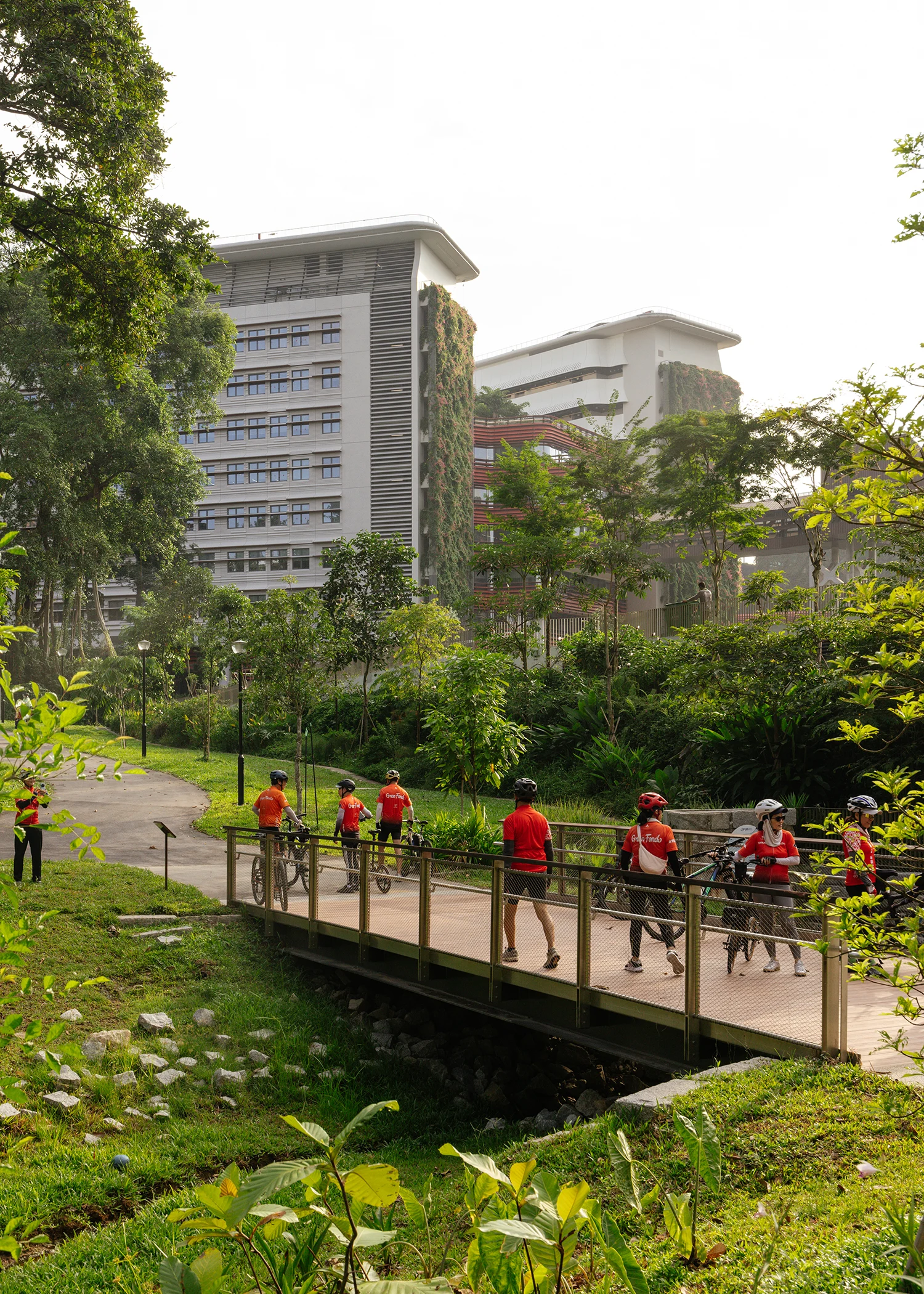
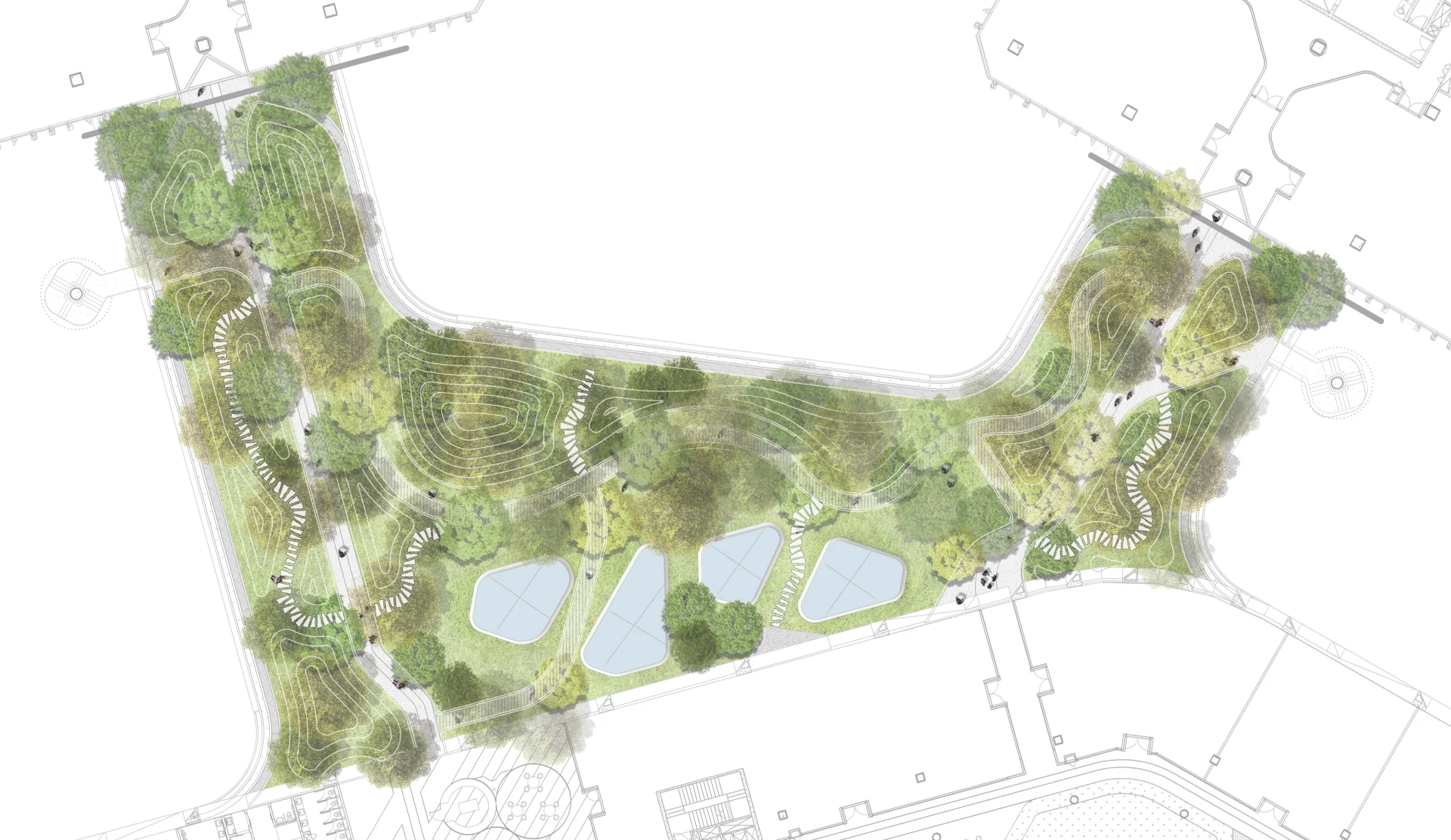
From the outset, we approached the masterplan as an interconnected environmental system. Rather than replacing nature, we let existing forests, grasslands, drainage patterns, and wildlife corridors linking Serangoon Reservoir, Coney Island, and the Punggol Waterway guide the framework. We then strengthened and extended these ecological systems into the heart of the district, making them integral to how it functions, connects, and grows.
“Innovation is not defined only by technology or buildings, but by how urban growth is reconciled with natural processes.”
Madeline Leong
Associate Landscape Architect
Designing as water
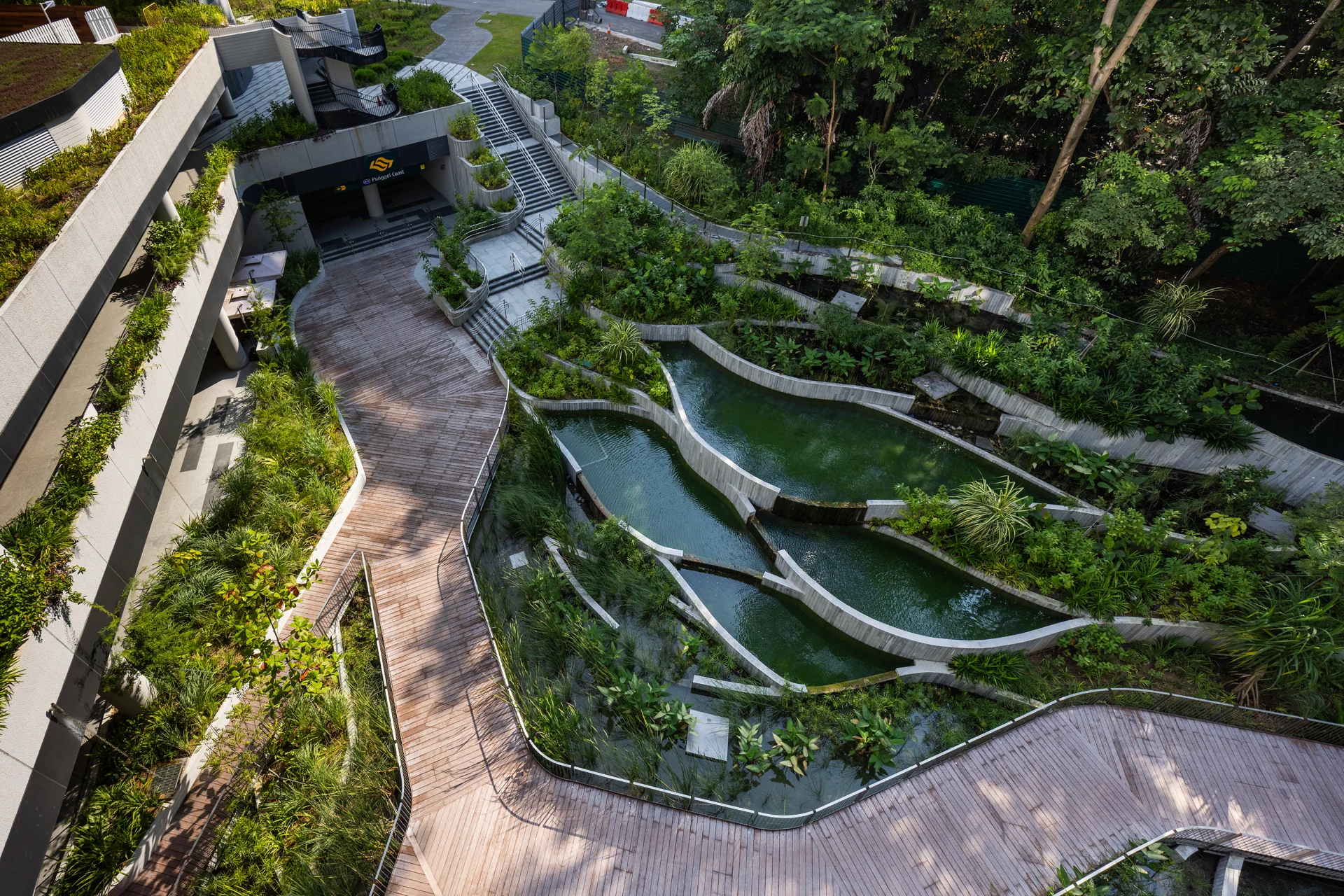
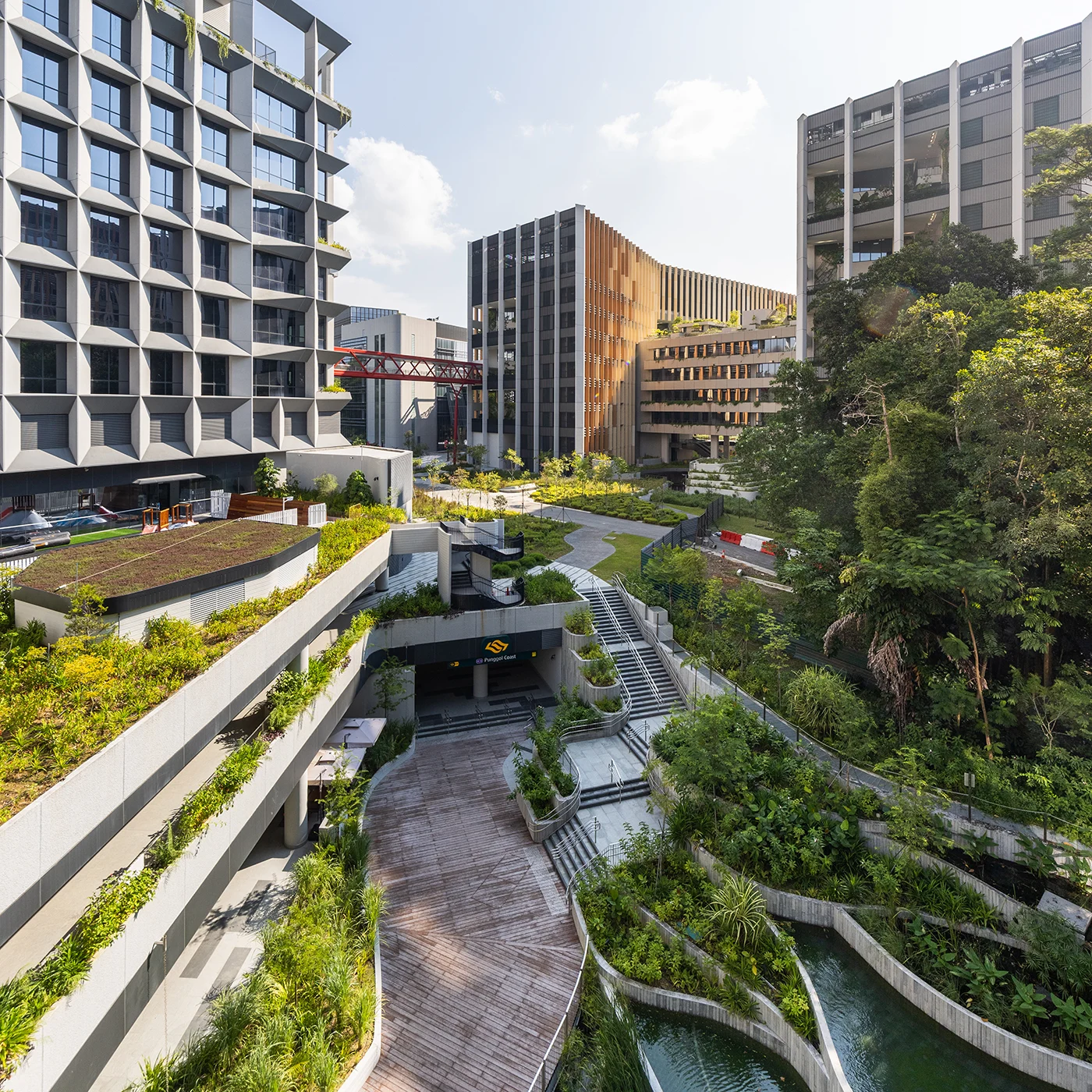
Water flows through Punggol Digital District as a continuous living system, connecting roofs, rain gardens, biotopes, ponds, and irrigation into a cohesive landscape that is experienced in the daily life of the district. Integrated into streets, plazas, terraces, and courtyards, these water systems shape the three-dimensional public realm and guide movement through the site.
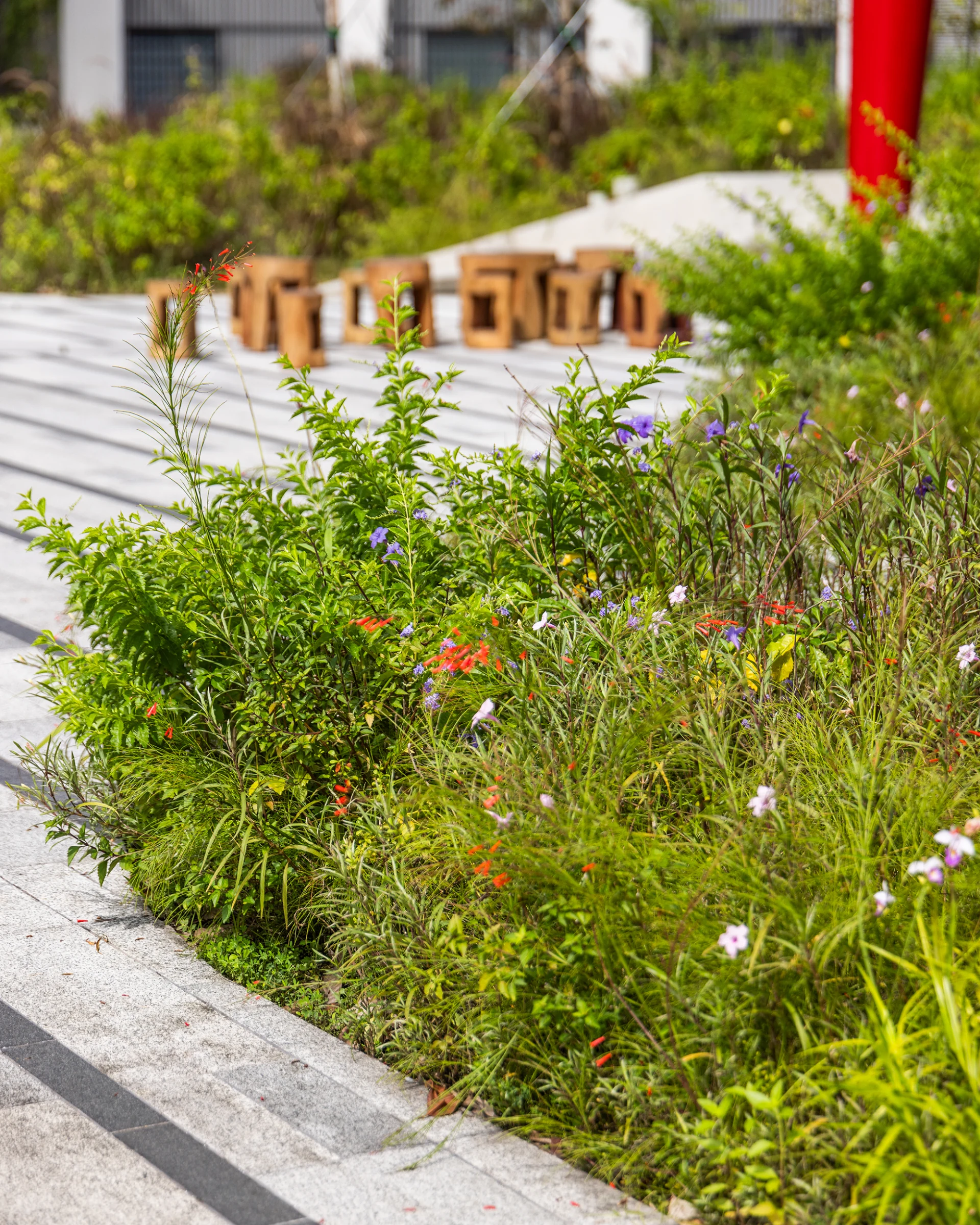
Water-sensitive design elements — including swales, detention ponds, and cleansing biotopes — are intentionally visible, allowing residents and visitors to see and engage with water and its processes.
Rainwater moves through planted landscapes at multiple levels, cooling spaces and enlivening the public realm after rainfall. Across the district, at least 45% of stormwater runoff is treated through planted systems, with detention designed for 1-in-10-year storm events. Modular tanks store around 208,000 cubic meters of rainwater annually — the equivalent of 83 Olympic-sized swimming pools — supporting irrigation and water features that enrich the district.
Water also guides movement and engagement with nature. Pedestrian routes from the Heritage Trail to upper-level gardens frame views of native plantings and wetland species, supporting birds, butterflies, and aquatic life.
Layered landscapes
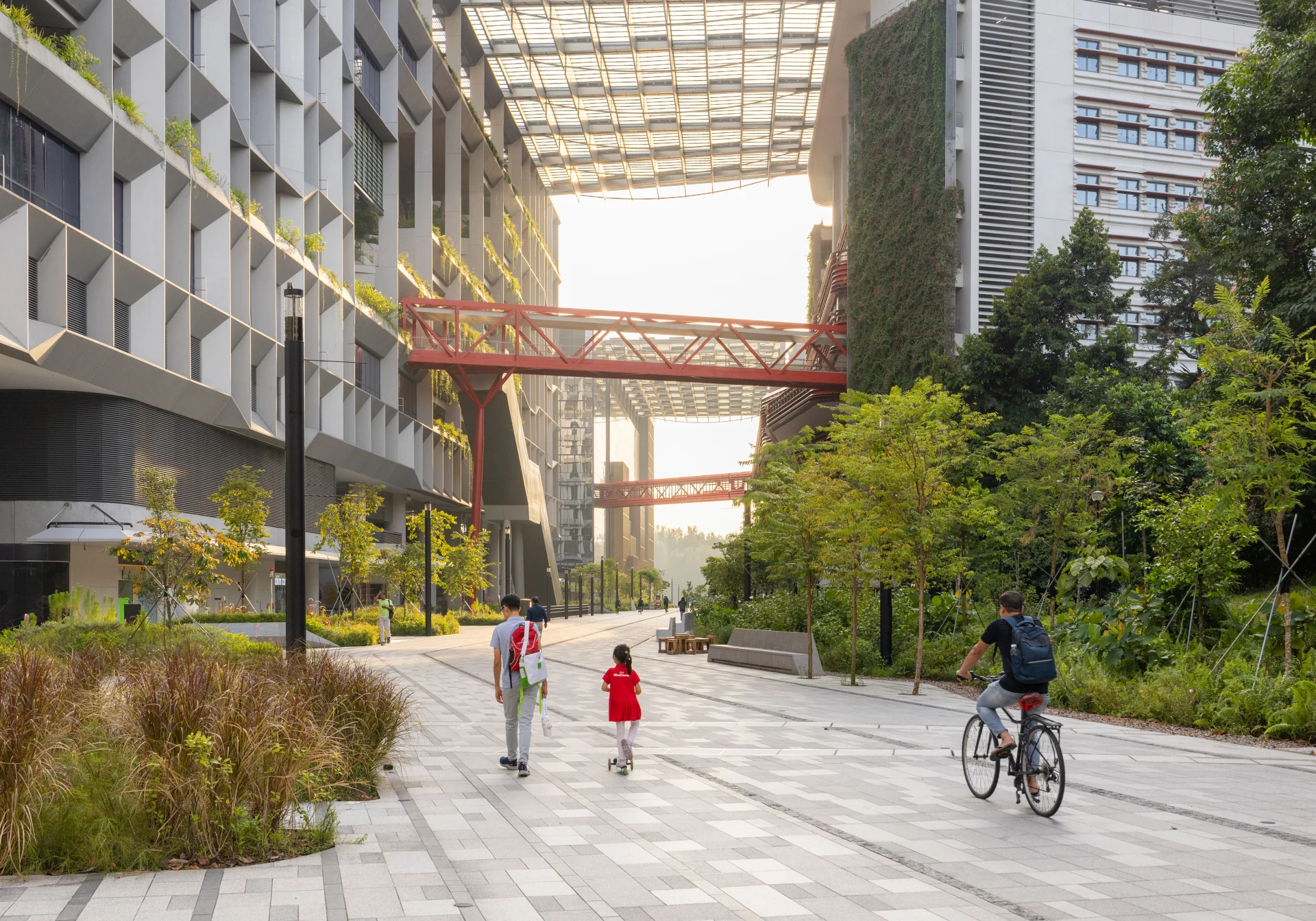
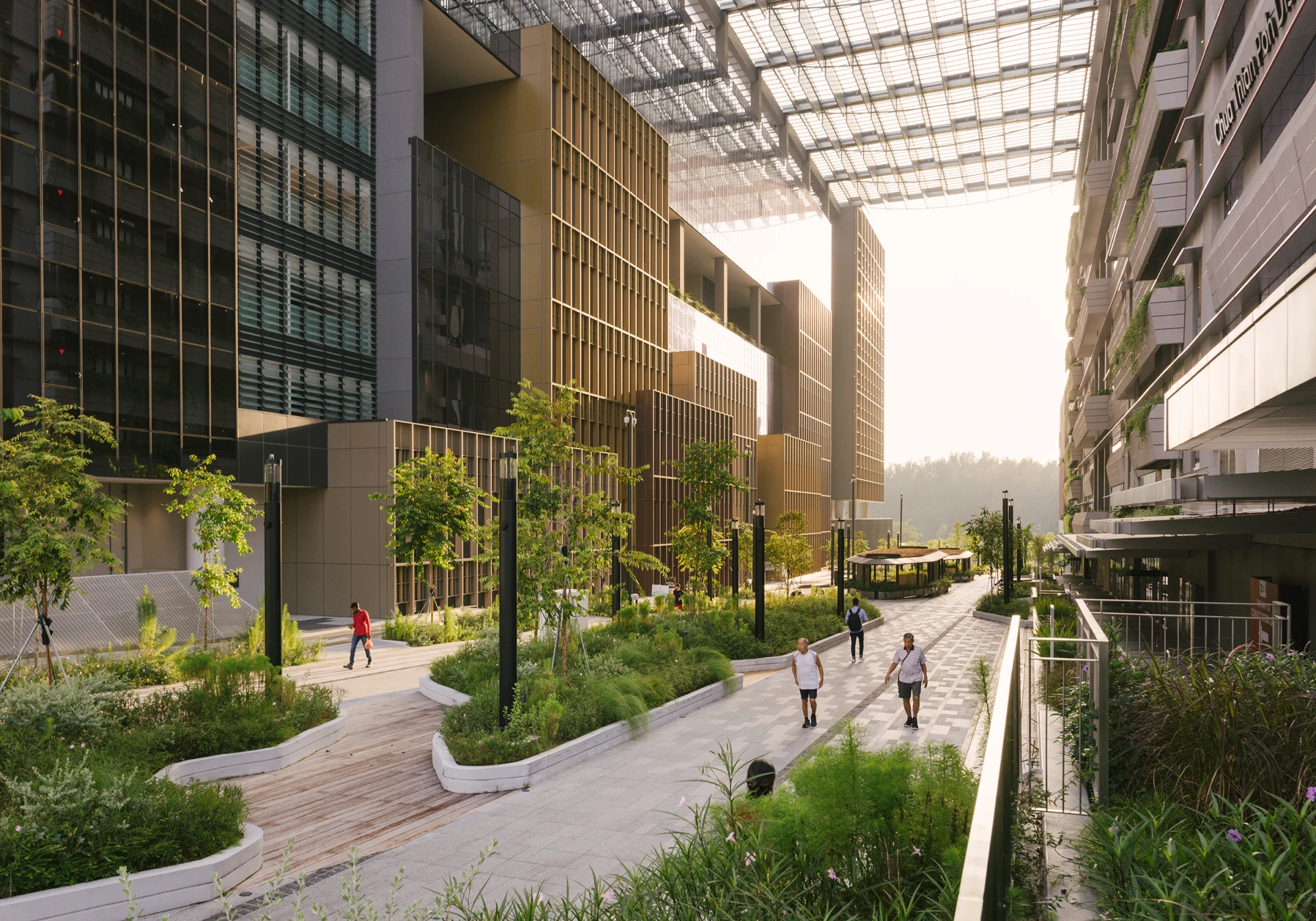
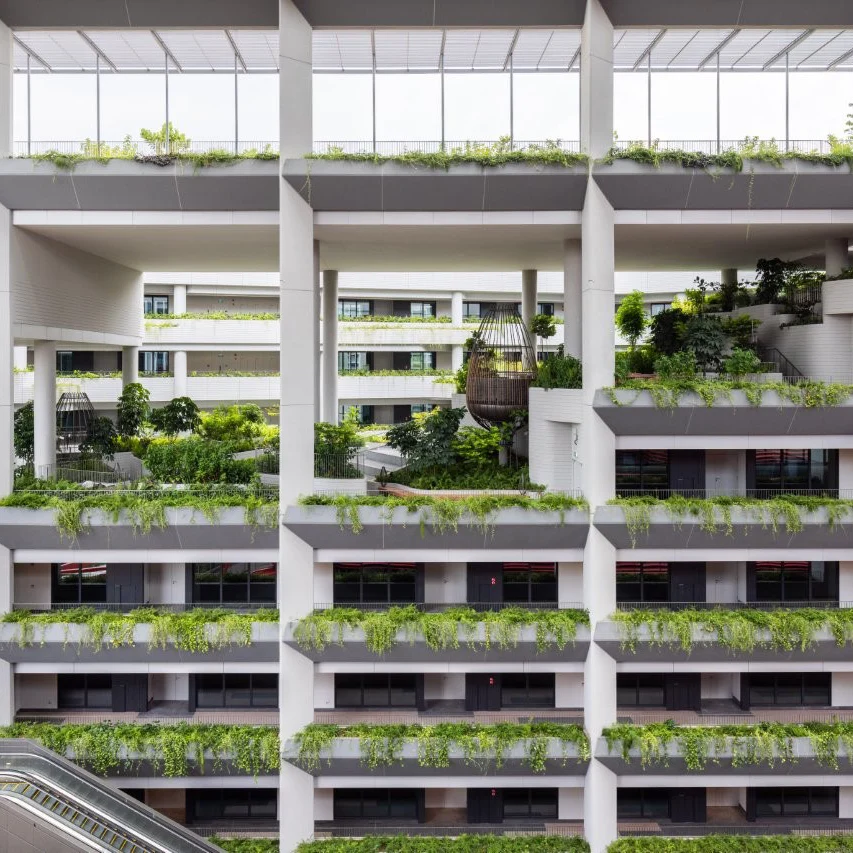
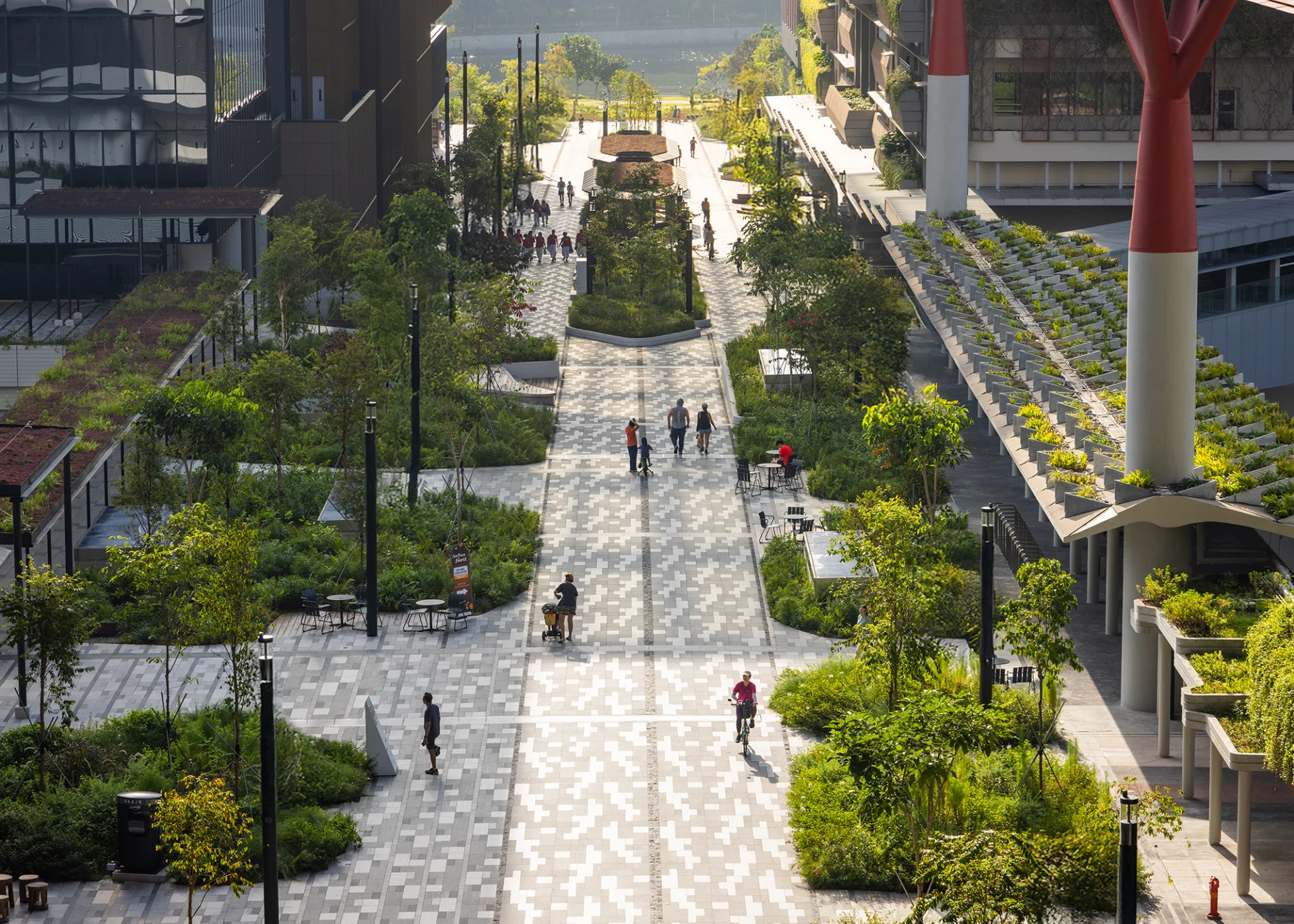
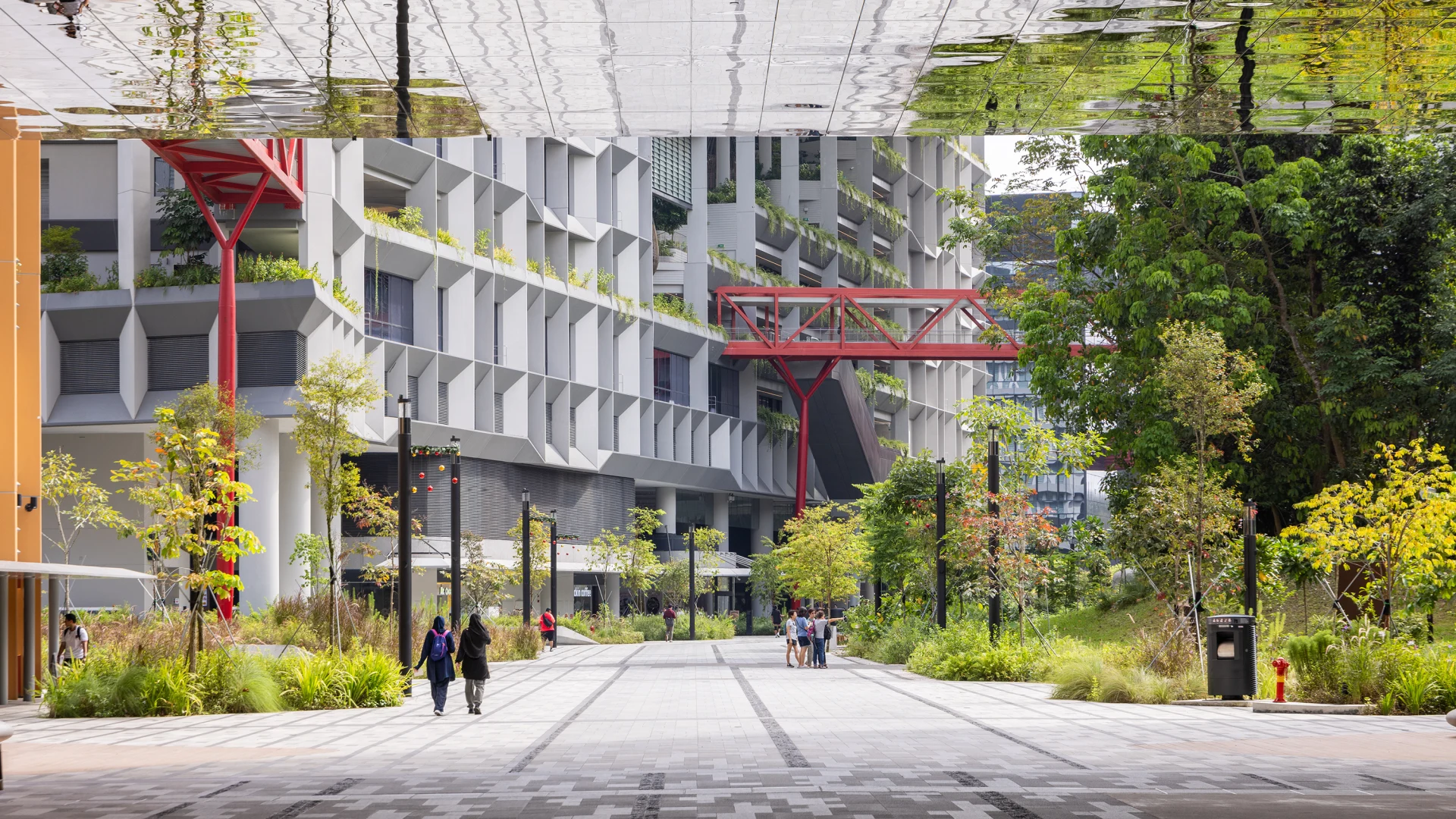
Layered greenery weaves through Punggol Digital District, connecting buildings and shaping spaces where people move, meet, and pause. Upper-level gardens, terraces, and bridges integrate trees, shrubs, groundcovers, and vertical planting. Each planting layer is carefully planned to respond to varying soil depths, exposure, and microclimatic conditions — ensuring resilience and ease of maintenance. Green walls and planted façades soften building edges, reduce heat gain, and visually extend the landscape into the vertical plane.
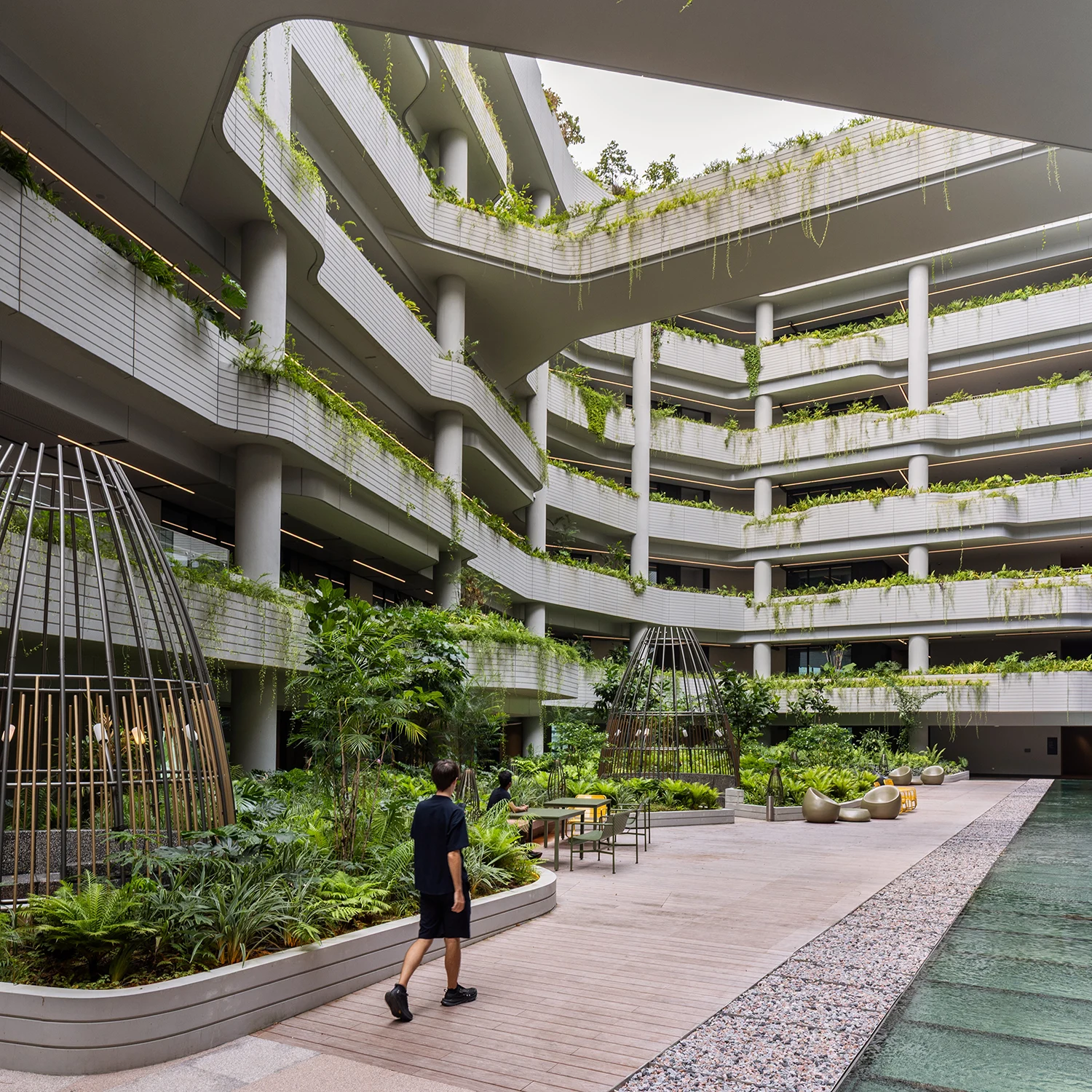
Native and regionally adapted species are planted to support local biodiversity, with layered canopies and understory planting providing shade, enclosure, and ecological value. The upper-level landscapes enhance natural ventilation and create spaces for outdoor work, informal meetings, and moments of respite within daily routines.
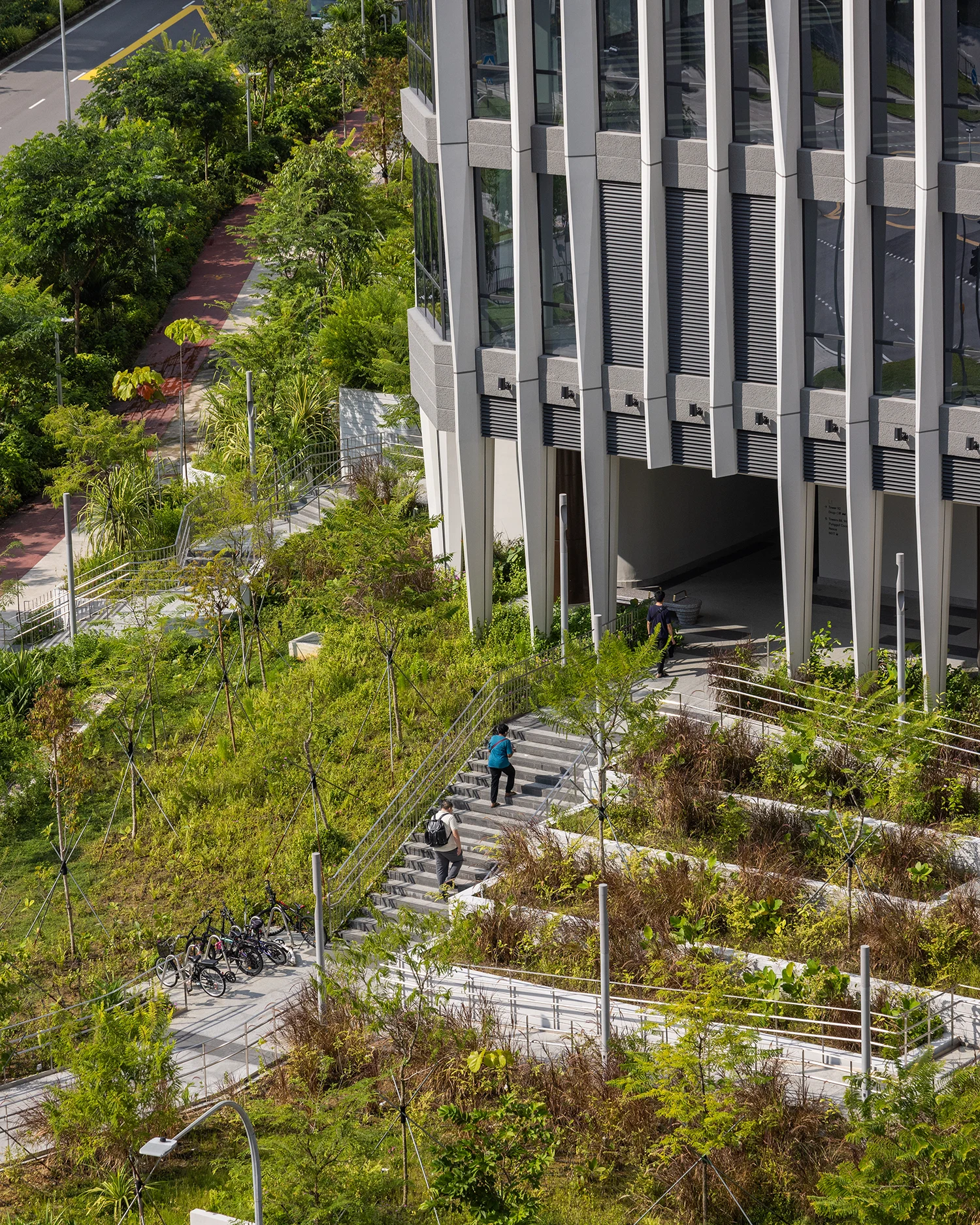
A row of mature rain trees along Punggol Seventeenth Avenue has been carefully retained and integrated, marking a familiar route and preserving traces of everyday life that preceded the district’s transformation.
A connected district
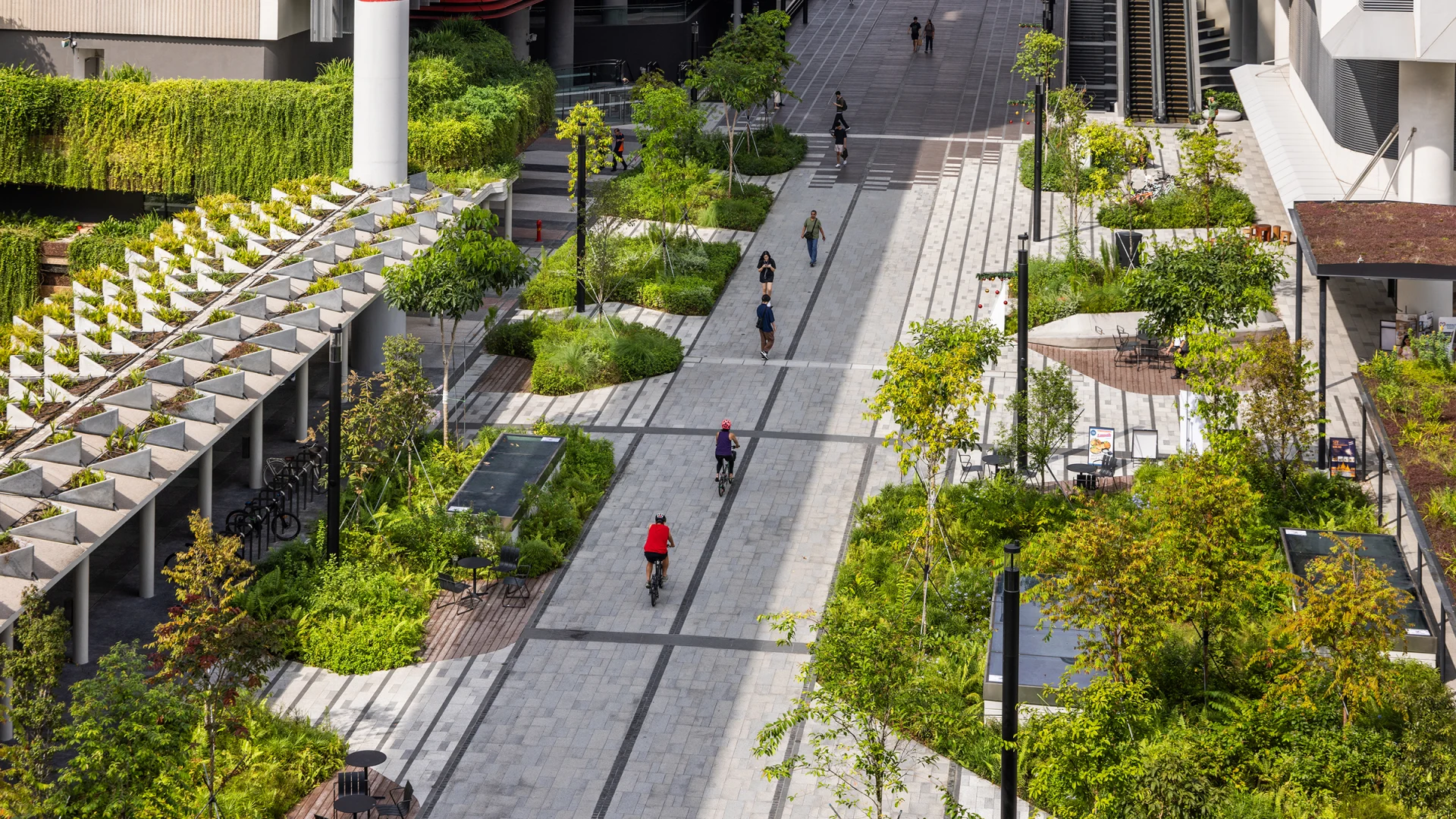
At the heart of Punggol Digital District, learning, community, and landscape are brought together. Retained tree clusters, generous planting, and shaded outdoor rooms create spaces for informal learning, rest, and social interaction, while ground-level parks and plazas flow seamlessly into academic buildings, dissolving conventional campus boundaries.
Running through the entire district, the 800m Campus Boulevard is a tree-lined spine for pedestrians, linking transit, campuses, business parks, and community facilities. Along its length, plazas, bridges, and adaptable landscape nodes host everyday encounters, markets, exhibitions, and performances, creating a flexible, shared public realm where students, faculty, industry partners, and visitors connect across the district.
Contact
All contacts
Associate Landscape Architect

Regional Director for Landscape, Henning Larsen APAC
Next project
Singapore Institute of Technology
Explore project