Vertical growth needs nature
By Jacky Pan
As cities grow taller and denser, nature becomes their most vital foundation. Design Director Jacky Pan explains how Dongguan Central Park makes the case.
Contact
Design Director
Dongguan's story mirrors that of many rapidly developing Chinese cities: once a manufacturing hub, now seeking contemporary reinvention. But amid rising towers and glass facades, the city has recognised a crucial truth: without green infrastructure, vertical growth risks becoming brittle and disconnected.
Defining space, not just occupying it
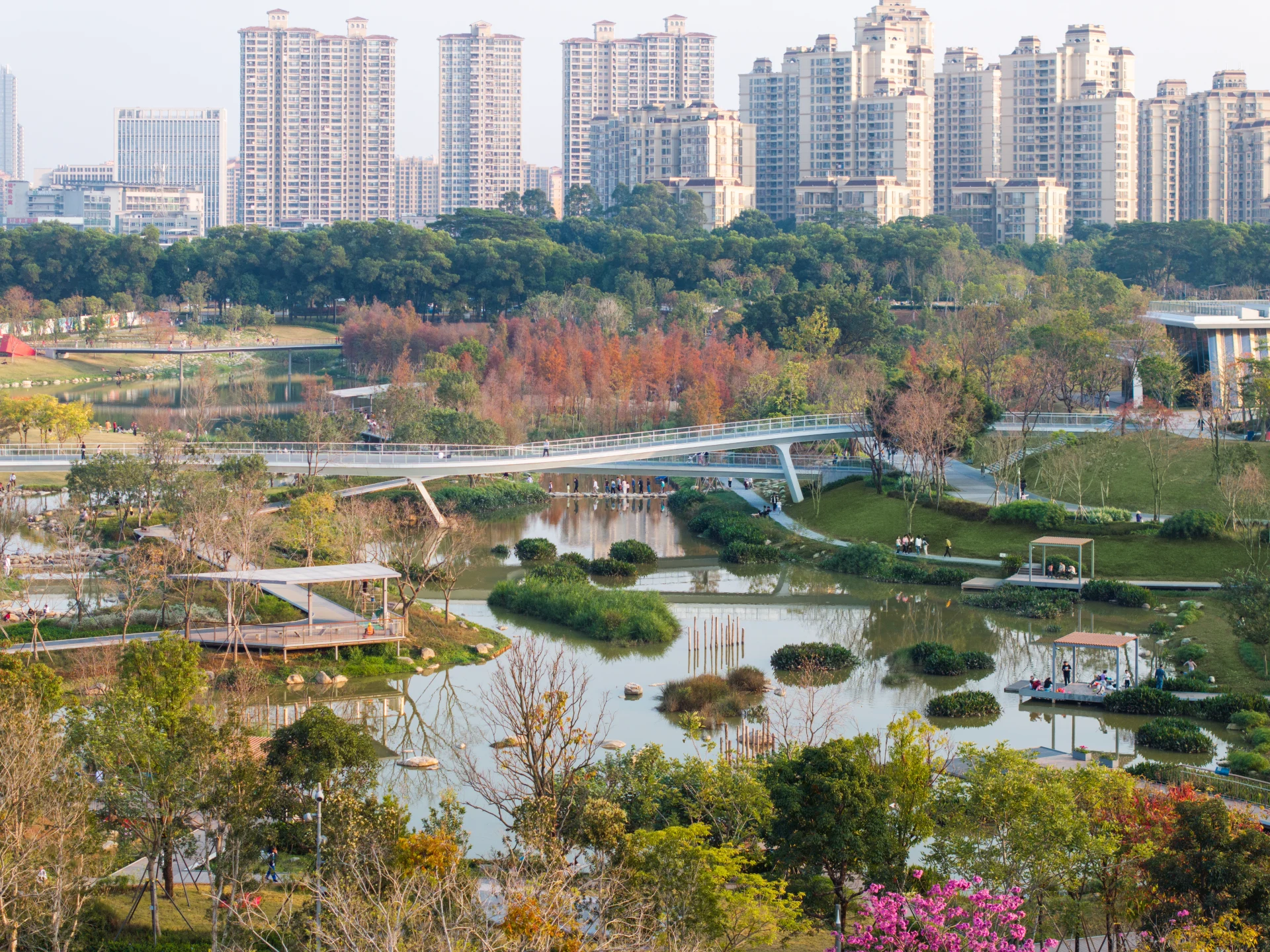
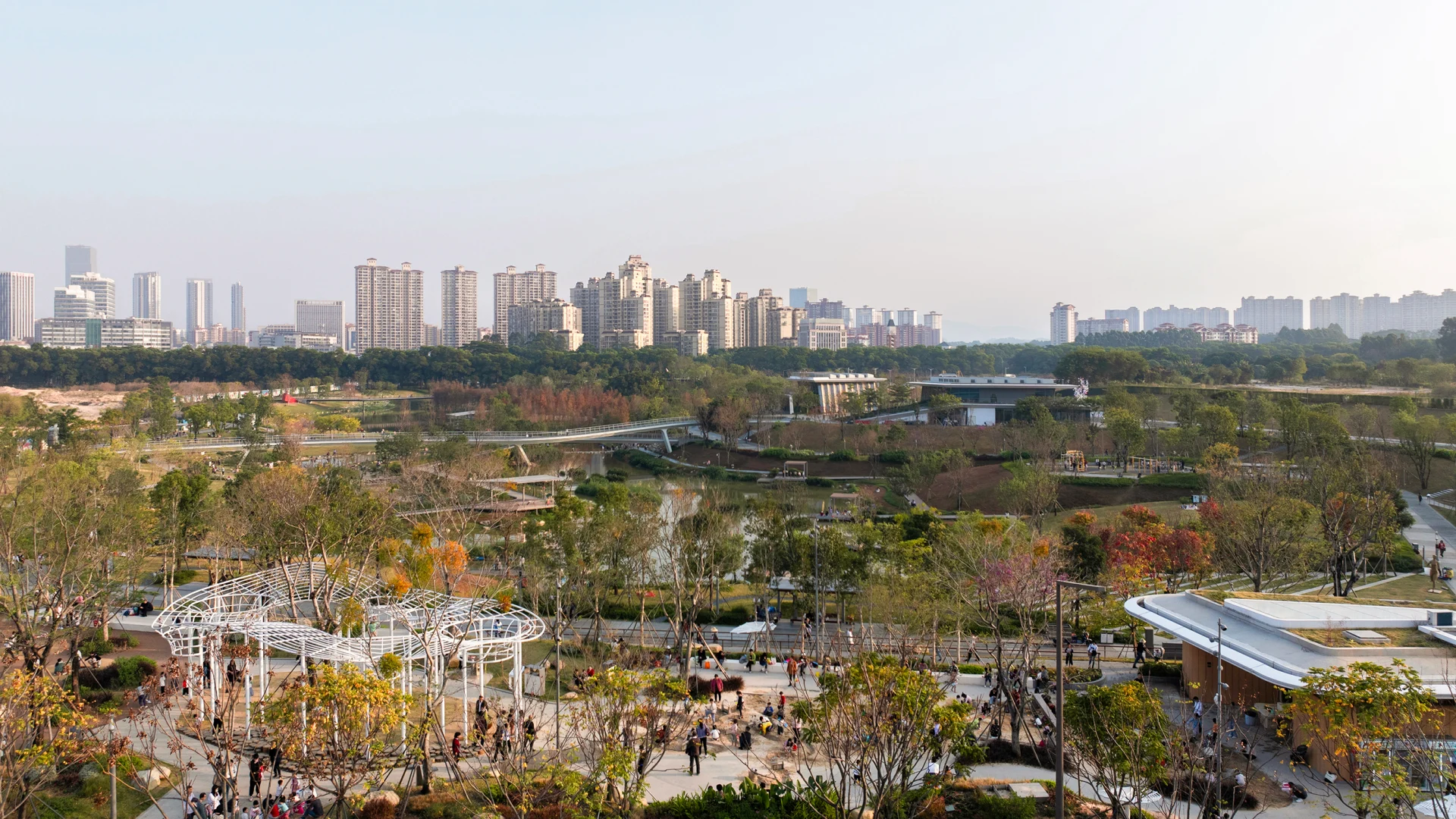
What distinguishes Dongguan Central Park from many others in China is not its 22-hectare scale or location, but its design ethos. The brief was refreshingly clear: create an international-calibre civic space that balances ecological integrity with cultural vibrancy. This required the design team to move beyond a conventional grand landscape gesture and instead engage with deeply interdependent systems of hydrology, ecology, urban mobility and public life.
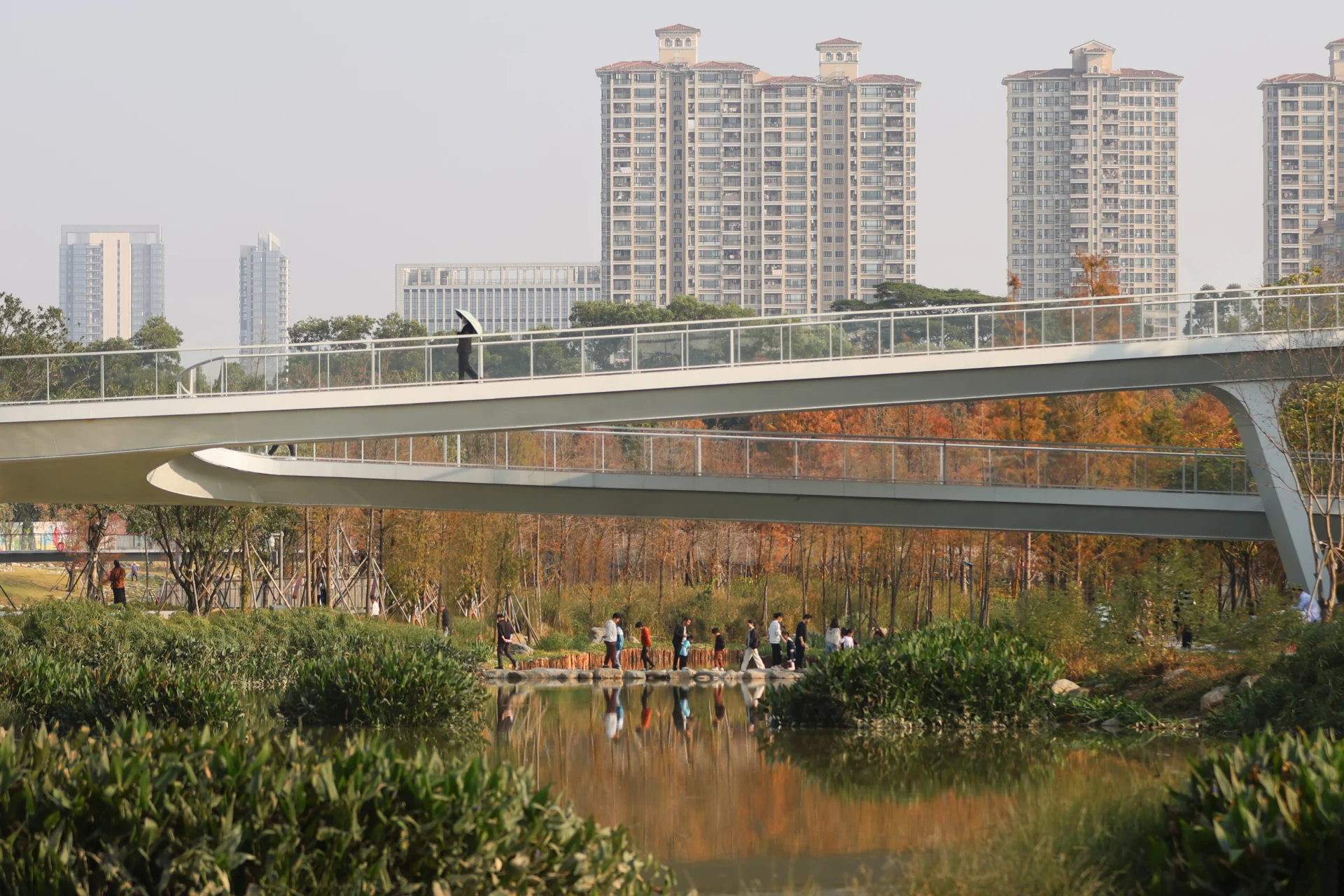
A pivotal moment in the process was the shift from isolated concept studies to a single, integrated design. The final design established a 1.8-kilometre promenade encircling the park, guiding visitors through varied zones for leisure, play and ecological encounter. It acts as connective tissue between the bustling business district and the rewilded calm of the riverbank.
Design as water
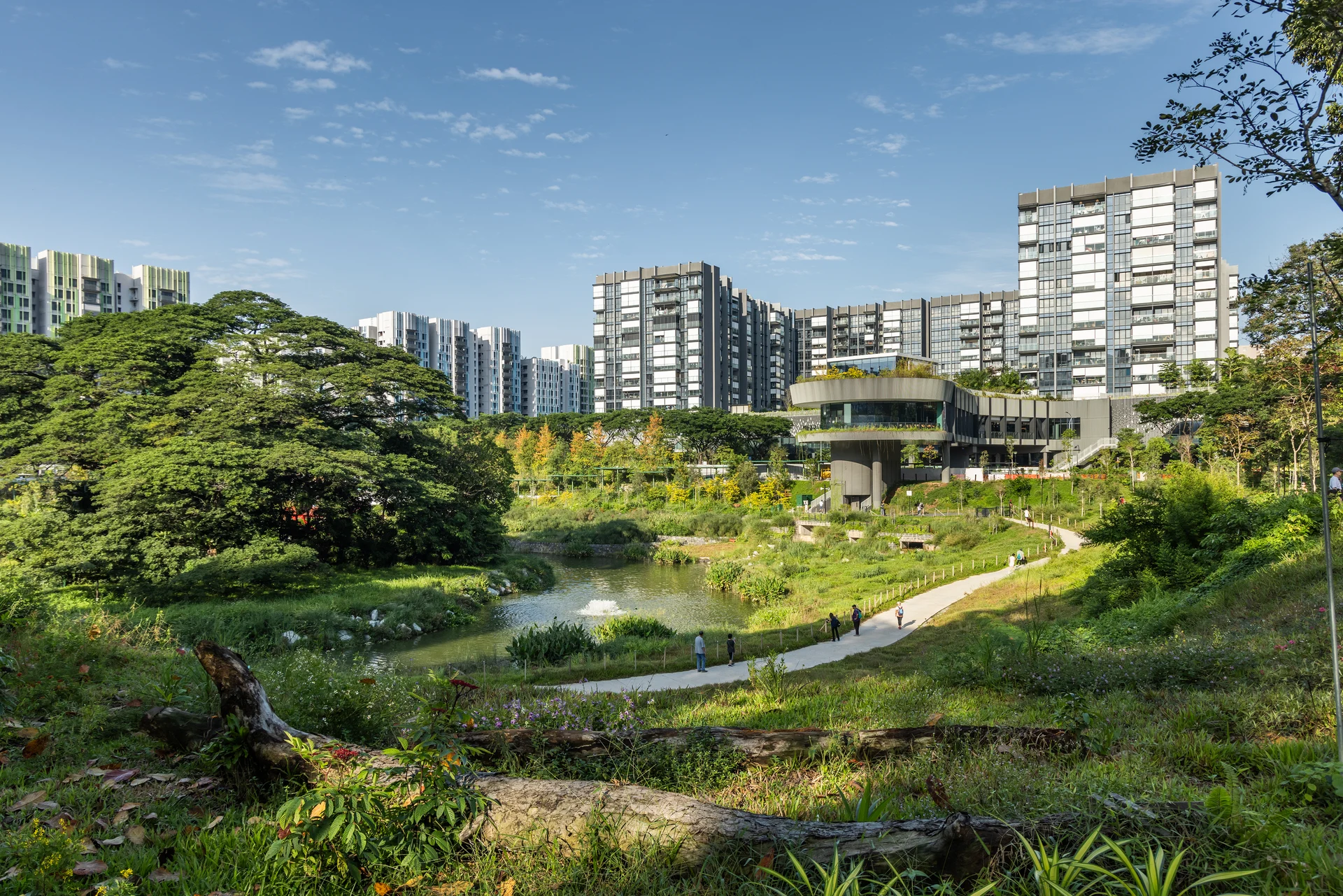
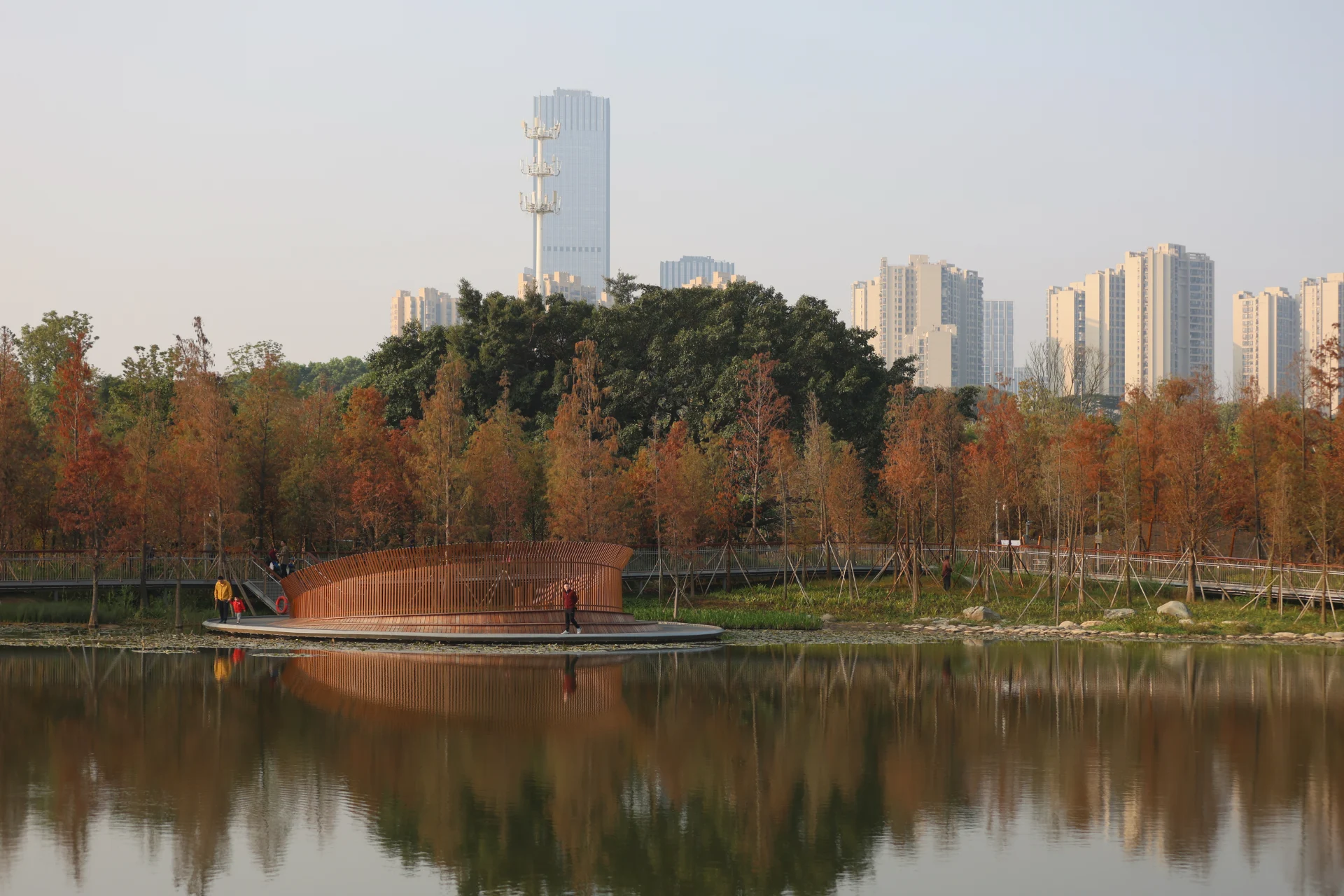
At the technical core of the project is the rehabilitation of the Xinji River. Once a polluted watercourse choked by runoff and neglect, it now anchors a dual-function hydrological system. The river's course was restructured to work in tandem with a central lake, forming a flood-resilient network capable of absorbing a 1-in-100-year rainfall event. Equally significant is how this system functions as civic infrastructure cleaning water through ecological wetlands, creating habitat for wildlife, and providing spaces for recreation and environmental education. These are not layered additions, but outcomes of a holistic landscape strategy.
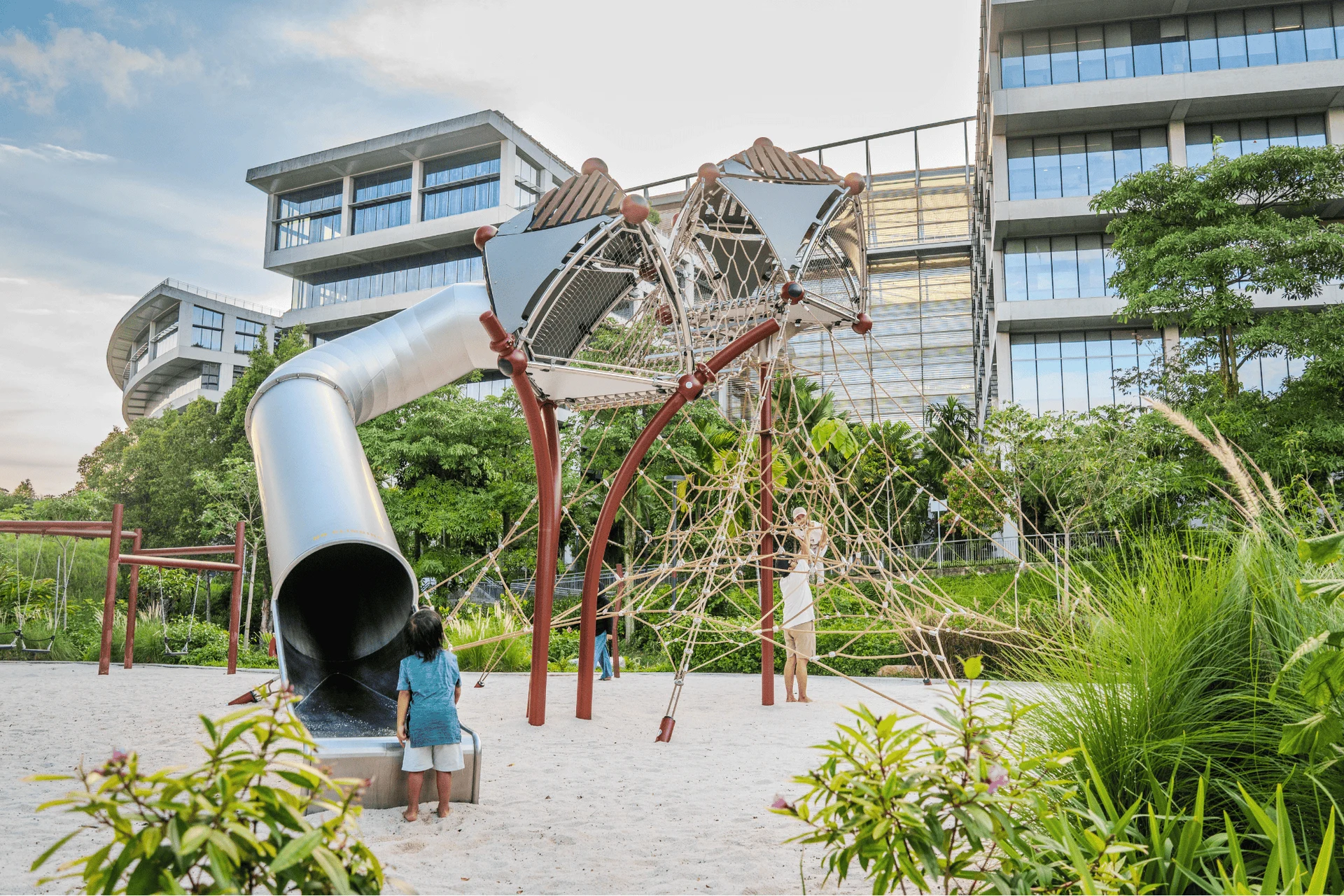
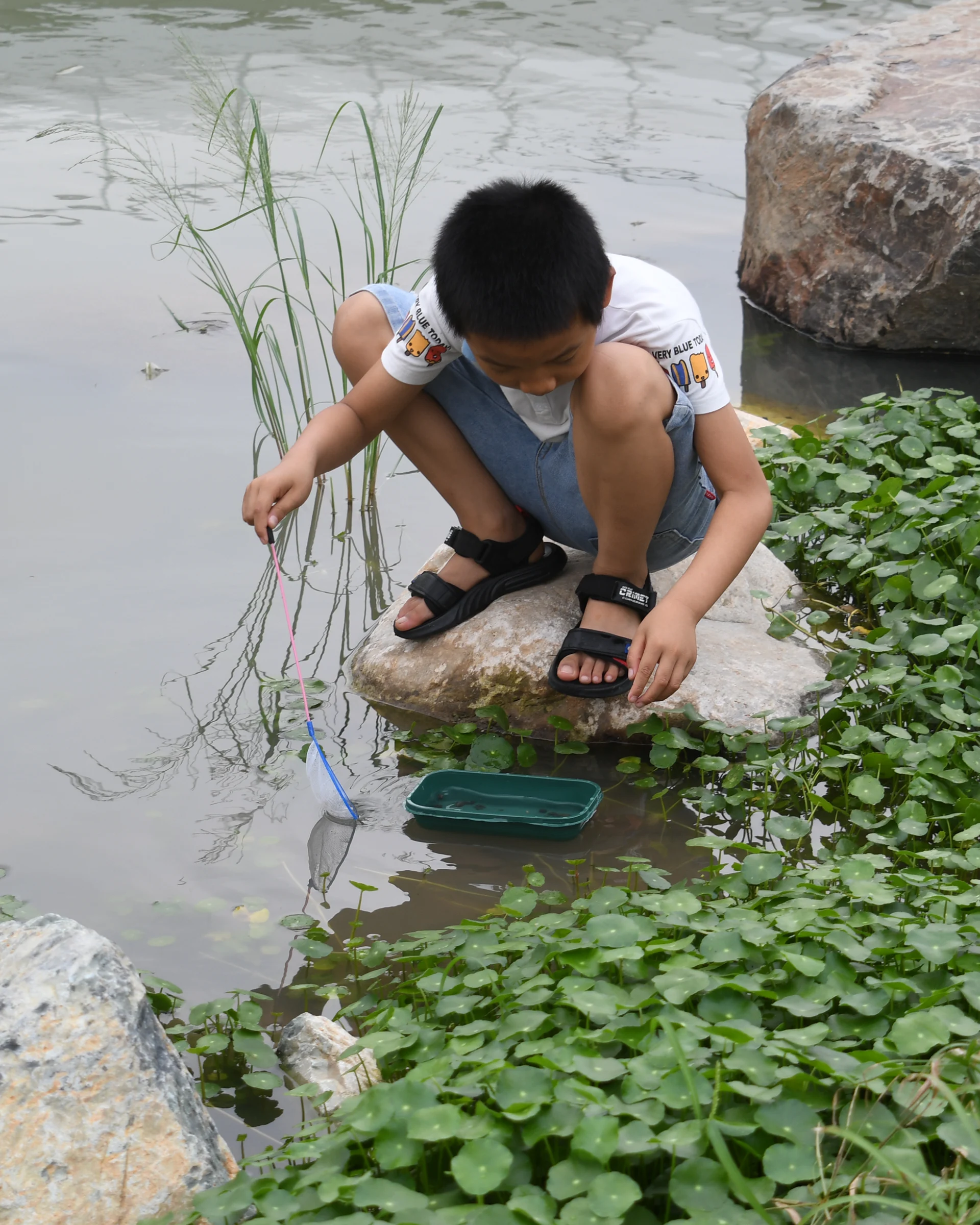
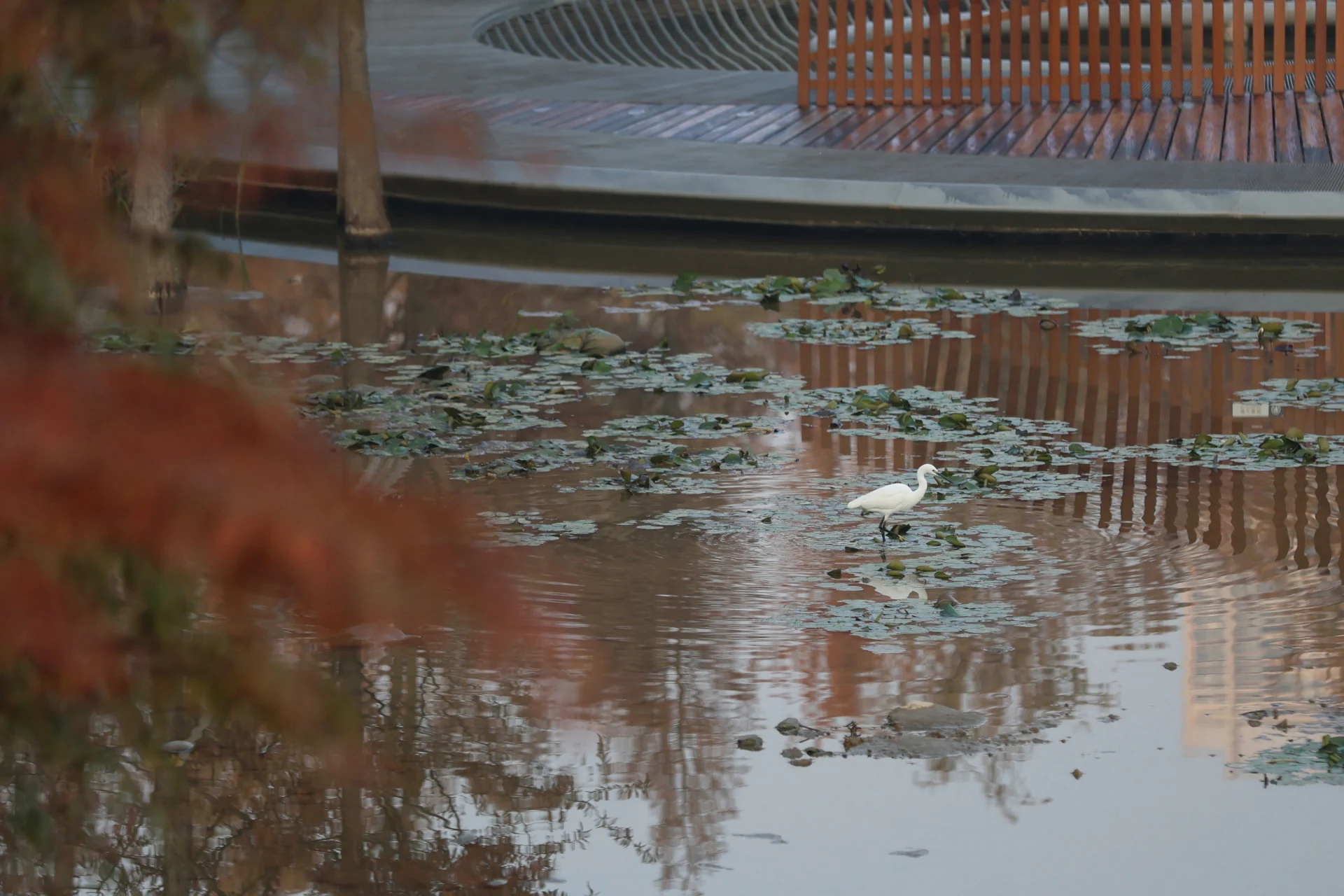
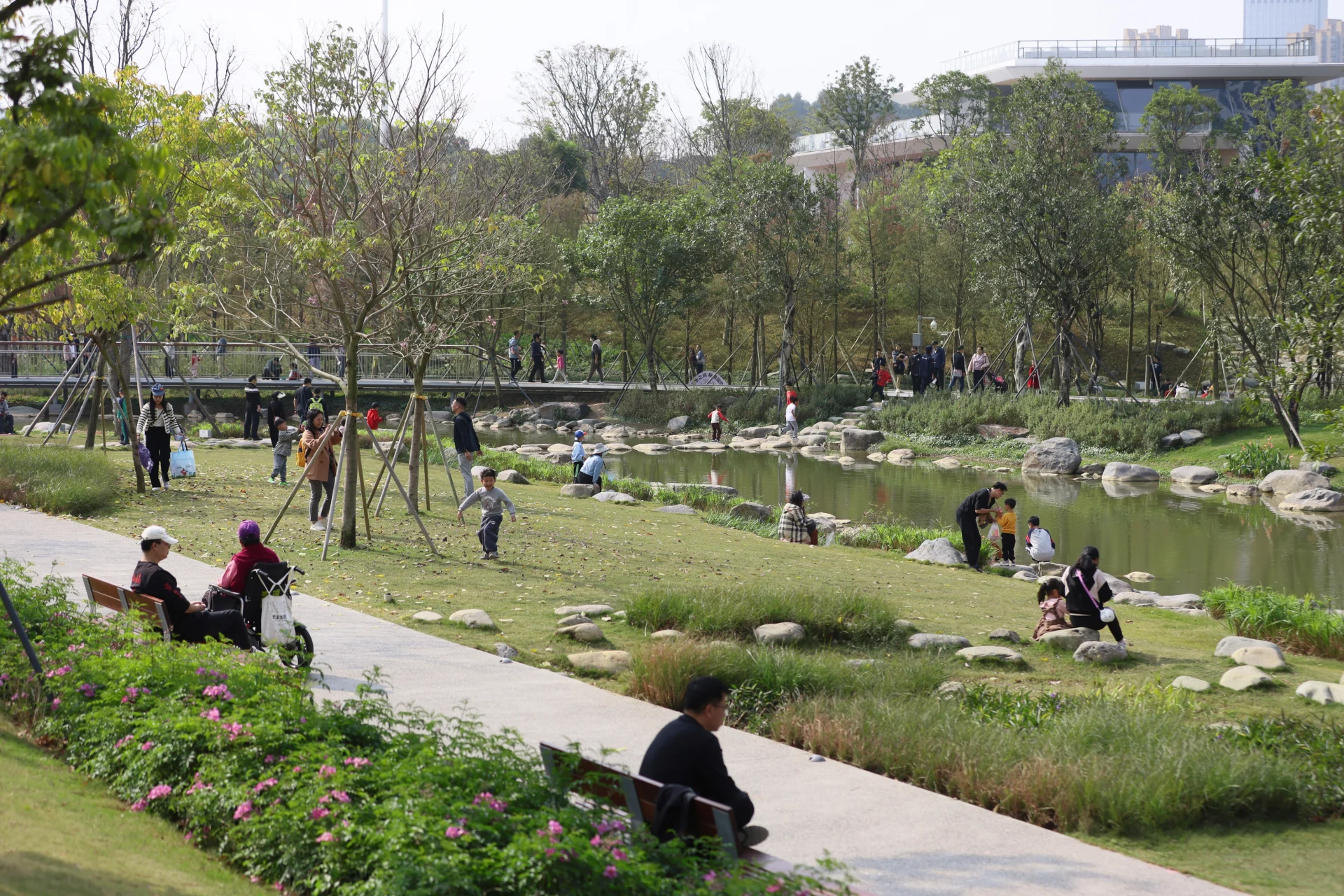
In an age of climate risk and urban intensification, landscape must serve multiple purposes at once: resilience, recreation, identity and biodiversity. The park's green infrastructure does not merely withstand floods or filter runoff. It invites children to play in rock gardens and birdwatchers to observe the more than 20 avian species now returning to the area. It reconnects people to water in a way that is immersive, not just visual.
Green as urban scaffolding
Embedding landscape as a core function, rather than an afterthought added after towers go up, can reframe the entire design process. Let water drive form. Let nature inform programme. Let civic use define the pulse. The shift from green as amenity to green as urban scaffolding may be the defining design pivot of our time.
In many ways, the project's greatest success is how inevitable it feels, like the park was always meant to be here, growing with the city rather than reacting to it. As cities across the globe face mounting pressure to densify, Dongguan Central Park makes a case for the centrality of landscape.
01/04