Reimagining campus mobility through nature
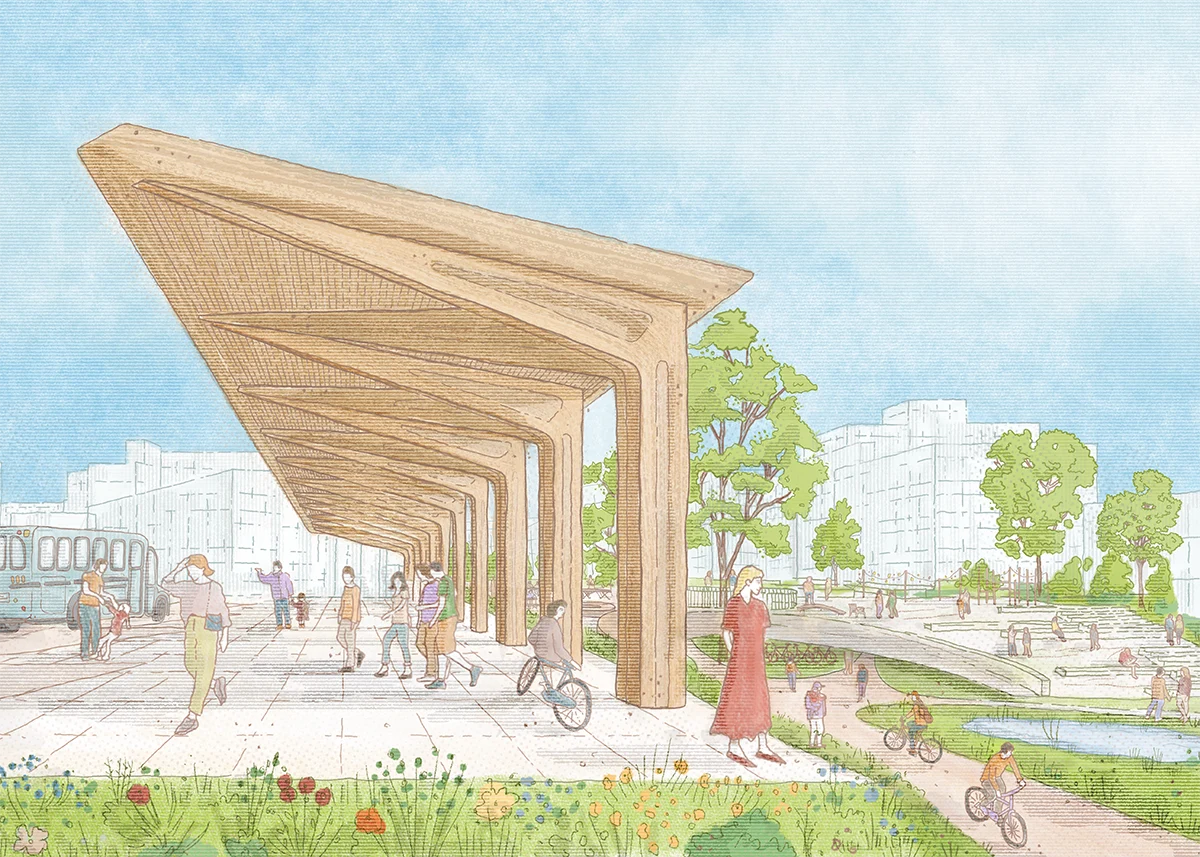
Students at the University of Konstanz will soon arrive in a space where bicycles, buses, and nature coexist — an open-air hub that transforms the act of getting across campus into a moment of connection and calm.
Contact

Head of Department, Idea, Concept

Master of Science, Architecture and Urban Design
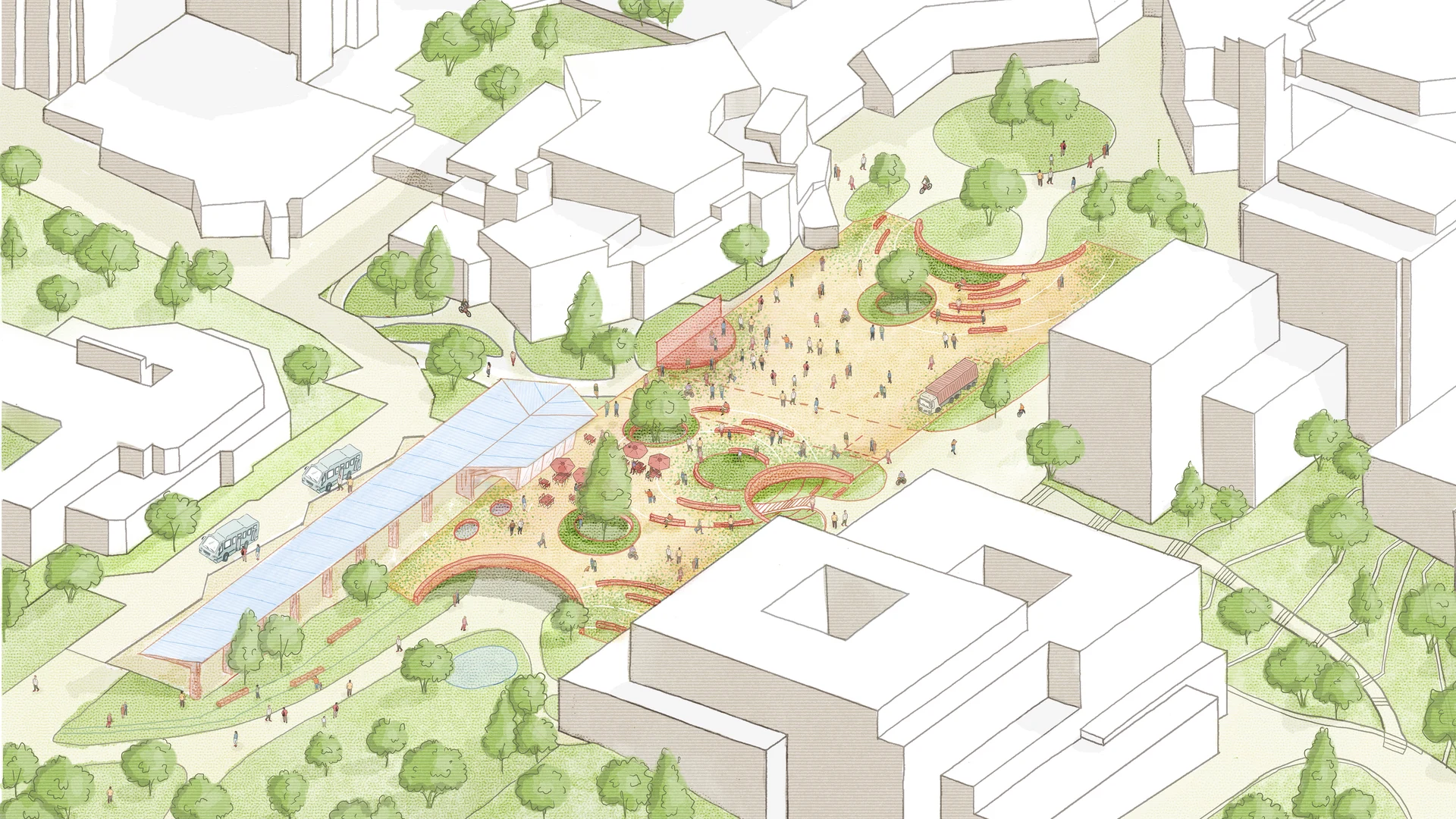
We have won the design competition for a new mobility hub at the University of Konstanz, conceived as an integrated architecture and landscape project. Located near the Swiss border on the shores of Lake Constance in Germany, the new 7,000 m² hub consists of a new bicycle garage, a wood-sheltered bus stop, and central plaza that will form the main entrance to the university.
The new mobility hub puts nature at the heart of campus life, transforming the moment of arrival into a social, calming experience. Open, connected, and biodiverse, the hub reflects the university’s values of innovation and collaboration.
“Nature guides the experience in our design, when we deprioritize cars and instead let people move through light, greenery, and open space, the campus comes alive.”
Hendrik Porst
Head of Department, Idea, Concept
Guided by nature
Our design reimagines the traditionally dark, grey underground garage as an open and integrated environment. Constructed from recycled concrete, the new bicycle garage is not only an infrastructure for mobility, but a spatial experience that connects architecture, nature, and people. The garage features a canopy-like roof with strategically placed openings that bring daylight and natural ventilation to the lower level, while also creating space for trees to grow through the structure itself.
Above ground, the roof becomes the central plaza — a multifunctional setting for everyday gatherings, events, and informal activity. Across its two levels, the building takes on a dual role: providing space for bicycle parking while guiding users from their arrival point toward campus entrances and facilities through a network of access points and paths.
The garage’s design incorporates the site’s climate and environment with a slightly concave roof that channels rainwater to retention boxes for irrigation and evaporation, while drought-tolerant, biodiversity-supporting plants reduce the need for additional watering. A natural garden encourages wandering and observation of seasonal changes, creating a calming environment that supports well-being and reduces exam-related stress.
We’re excited to continue to develop the project together with the client. The project is expected to complete in 2031.